
Gelco Chimney Sweep in Lynnwood: A Homeowner’s Guide
When you search a chimney company by name, you’re usually not loyal to the brand. You’re trying to verify whether the work they did, or the work they’re about to do, is up to standard. We get it. Gelco is a familiar regional name, and plenty of homeowners in Lynnwood land here looking for a straight answer about materials and method rather than a sales pitch. So here’s the honest one: a brand name on a cap tells you almost nothing. What matters is what happens during the inspection, what the sweep report documents, and whether the products going into your flue meet current NFPA 211 requirements. If you’d rather skip the research and get a real answer about your chimney, call (855) 550-7286.
What does NFPA 211 actually require a chimney sweep to check?
NFPA 211 is the national standard for chimneys, fireplaces, vents, and solid fuel appliances. It’s not a marketing credential; it’s the baseline that any legitimate chimney professional works from. In practice, an inspection that follows the standard looks at the full venting system, not just the flue you burn in.
A proper Level 1 inspection, the one you get alongside a routine sweep, should cover:
- The firebox and damper, including cracks in the firebrick and how well the damper seals
- The smoke chamber, where creosote and soot collect behind the damper shelf
- The flue interior, checked for glazing, gaps in the liner, and correct sizing for the appliance
- The mortar joints on the exterior stack, plus the crown and any cap or screen
- Clearances to combustibles at the roof line and where the chimney passes through framing
- Whether the cap is intact and the crown is shedding water the way it should
A Level 2 inspection adds a camera scan of the flue and applies when you’ve changed appliances, bought a home, or had a chimney fire. If a sweep can’t explain what level of inspection you’re paying for and why, that’s your first red flag. In our experience working Lynnwood homes, the camera scan is where real problems surface, and it’s the part budget-driven providers tend to skip.
CSIA certification is separate from NFPA 211: it’s a voluntary credential showing a sweep has passed a written and practical exam on chimney systems and inspection standards. It’s worth asking about, but since not every qualified sweep carries it, pair the question with a look at the actual report they hand you. A thorough report is the proof of the work.
What equipment separates a real chimney sweep from a basic brush job?
Brush and rod sets handle light soot. They don’t handle glazed creosote, which is the hard, shiny, tar-like buildup that forms after repeated hot fires on a cool flue, and it’s the stage most connected to chimney fire risk. This is where the equipment difference shows.
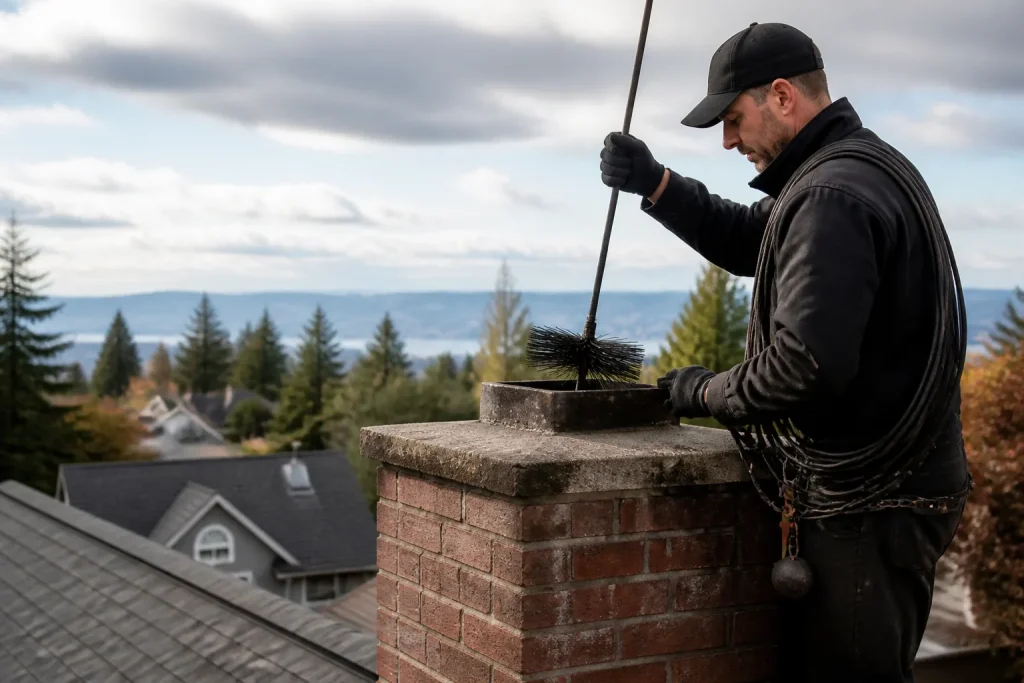
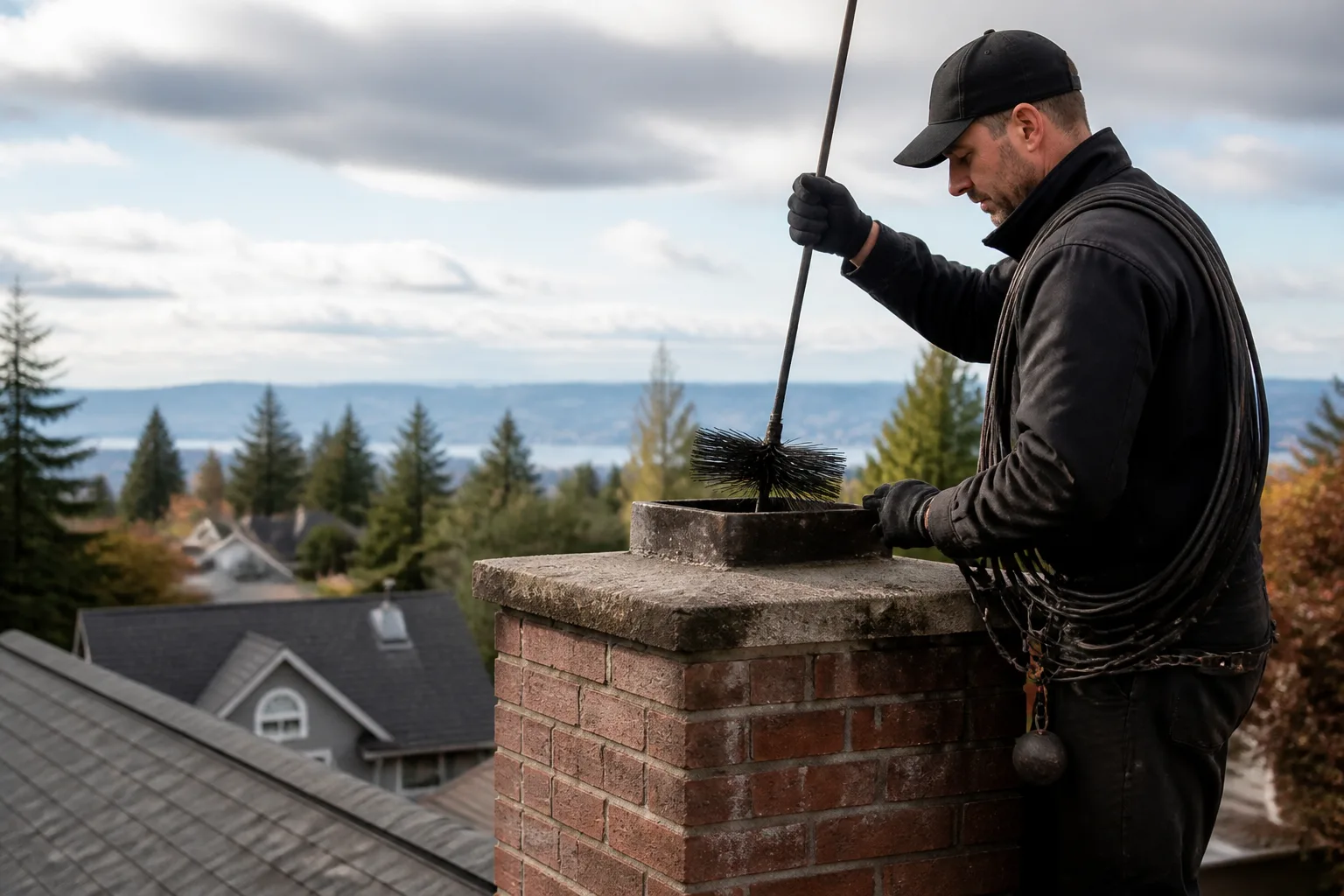
Professional chimney services use rotary cleaning systems, which spin a weighted whip or chain head through the flue to break down third-stage creosote that a hand brush just polishes. The sweep then vacuums the debris with a HEPA setup so the living room doesn’t end up dusted in soot. That’s the kind of equipment distinction that separates a genuine sweep from a general contractor who added chimneys to the truck sign.
A few things to look for:
- Rotary cleaning capability for glazed creosote, not just a brush.
- Camera inspection to see inside the flue before and after.
- Drop cloths and a HEPA vacuum so the job stays clean.
- Trade-grade materials on the repair side: liners, caps, and crowns from professional chimney suppliers rather than box-store parts.
We work with brands like DuraFlex for flexible liner systems, HeatShield for flue resurfacing, and Gelco and Olympia Chimney components for caps and venting. The reason isn’t brand loyalty for its own sake; it’s that these systems are built and tested for the flue types they go into.
What should a completed sweep report document?
A sweep report is a diagnostic record, not a receipt. If yours only says “swept chimney, all clear” with a signature, you’ve paid for a service and gotten nothing you can act on. Here’s what a report worth keeping should show.
- Liner condition: material type, any cracks, gaps, or signs of deterioration, with photos.
- Cap and crown integrity: whether the cap is intact and the crown is unbroken and pitched correctly to shed water.
- Mortar joints: condition of the joints inside and out, since crumbling mortar lets water in and weakens the stack.
- Creosote level: what stage was found and how it was addressed.
- Clearances: any areas where the chimney sits too close to combustible framing.
- Photos: camera images of the flue before and after, so you can see what the sweep saw.
You should be able to read the report, look at the photos, and understand exactly what condition your chimney is in. A Lynnwood homeowner with a wood-burning fireplace deserves that level of detail, because it’s the difference between choosing a repair now and discovering a problem after a leak has already reached the masonry. The inspection is the diagnostic; the report is the evidence.
Gas inserts in Lynnwood: is your sweep qualified to check both venting types?
One thing we’ve learned about Lynnwood: a lot of homes have gas inserts or gas fireplaces alongside, or instead of, wood-burning setups. Conversions are common, and they raise a real question. Gas appliances vent differently from wood, and inspecting one doesn’t qualify someone to inspect the other without knowing what to look for.
A sweep who handles both wood-burning and gas venting should be able to check:
- The correct vent type for the gas appliance, and whether it’s properly connected
- Signs of spillage or poor draft from the gas unit
- The condition of a wood flue that’s been converted (the old flue still exists and still needs attention)
- Any blockages or debris in a venting path that hasn’t been used in years
The appliance-venting side matters because a gas fireplace that vents poorly can introduce combustion byproducts into the home, and a converted wood flue that was never fitted with an appropriately sized liner may draft wrong. If you’re unsure which appliance you have or what’s venting where, the inspection answers that. When in doubt, ask your provider whether their inspection covers both. A generalist handyman will usually dance around that question. A chimney-only specialist will tell you directly what they check and what they don’t.
Why chimney-only specialists carry different insurance and liability coverage
This is the part most homeowners never think to check, and it’s the one that protects you. Chimney work happens at height, involves working around fires, liners, and masonry, and sits on your roof. A general home-services company doing chimneys on the side is usually insured for handyman or general contractor risks, not for the specific exposures of chimney work. The gap shows up when something goes wrong.
A chimney-only specialist should carry general liability coverage sized for the work, plus workers’ compensation for anyone on the roof. What that means for you:
- If a technician is injured on your property, workers’ comp is the specialist’s problem, not yours.
- If a liner install or crown repair fails and causes water damage, the liability policy responds.
- A general contractor’s policy may exclude chimney work or the height involved, leaving you exposed.
We don’t publish a policy number or a sticker claim, because those numbers mean nothing without knowing what the coverage actually pays for. What you can do is ask any provider for a certificate of insurance before work begins and read the covered operations line. A chimney-only specialist answers that request easily, because it’s routine for them. If a provider gets vague, that’s the look-elsewhere moment. From the firebox to the crown, the work is specialized, and the coverage should be too.
When to call a pro
Some maintenance you can handle. A chimney that’s venting a live fire is different. Call a professional if you notice any of these:
- A strong, sharp creosote smell or soot stains around the fireplace opening
- Smoke rolling into the room instead of up the flue
- Visible cracks in the firebox brick or crumbling mortar on the stack
- A damaged or missing cap, or water staining on the chimney exterior
- Any sign of a past chimney fire, or a flue that’s never been inspected
High-tension springs and heavy stack components aren’t a homeowner’s job, and neither is getting up on a steep roof to check the crown. Our technicians have up to 12 years of experience, and the local pros we connect you with are licensed and insured as their state requires. A sweep, an inspection, a repair, and a new cap or crown can all happen in one relationship, no handoff to a second contractor. The written estimate sets the price before any work starts, and nothing gets recommended without camera evidence you can look at yourself.
Related services in Lynnwood: if you’re starting with the basics, a chimney sweep is the first step. If the inspection turns up interior problems, see our fireplace repair and chimney repair pages for what that work involves.
The Bottom Line
A Gelco search in Lynnwood should really lead you to a materials-and-method question: what does this sweep actually check, what equipment do they use, what does the report prove, and are they insured for chimney work specifically? Those four answers tell you more than any brand name. If you’re in Lynnwood and need a straight answer about your chimney, Chimney Sweep Lynnwood offers free estimates. Call (855) 550-7286. We answer 24/7. Fast dispatch from 7am to 7pm, Sunday through Friday.
Frequently Asked Questions
Once a year is the standard for a home that burns regularly, and more often if you burn a lot of softwood. The sweep should happen before burning season resumes in the fall, and the inspection alongside it tells you whether the flue is ready. Call (855) 550-7286 for a free estimate.
Gelco is a name you’ll see on chimney caps and components, not a term for a sweep service itself. What matters is whether the products on your chimney are professional trade grade and whether the sweep’s inspection meets NFPA 211. We source Gelco and Olympia Chimney components for the caps and venting we install. Call (855) 550-7286 to talk through what your chimney needs.
Yes. Chimney work at height and around liners and masonry carries exposures a general handyman policy may not cover, so ask for a certificate of insurance and read what operations it covers. A chimney-only specialist answers that request routinely. Call (855) 550-7286 and we’ll walk you through it.
Yes, when the provider is qualified for both venting types. Gas appliance venting and wood flue venting are inspected differently, and a converted wood flue still needs attention even if you’ve moved to gas. Ask your provider to confirm what their inspection covers. Call (855) 550-7286 for a free estimate.
Written by the team at Chimney Sweep Lynnwood.
Need Chimney Cleaning Help?
Call Chimney Sweep Lynnwood - the local pro we connect you with is licensed and insured, with free written estimates in Lynnwood.
(855) 550-7286