
Top Signs You Need Chimney Cleaning Service – Don’t Ignore These
Most chimney warning signs get filed under one label: creosote. And sure, creosote buildup is real and worth watching. But some of the most serious symptoms homeowners notice in Lynnwood have nothing to do with creosote at all. They point to water getting into masonry, a vent that’s no longer sealed, or a damper that stopped doing its job. Knowing which symptom belongs to which problem is what tells you whether you need a sweep, a camera inspection, or a repair. It also tells you when to ignore the internet and call someone. If you’d rather have a trained eye look than guess from a checklist, call (855) 550-7286.
What are the real signs you need chimney cleaning in Lynnwood?
The signs split into two groups, and they call for different responses. Creosote symptoms tell you the flue needs sweeping. Structural symptoms tell you sweeping alone won’t be enough. Here’s how to tell them apart before you book anything.
- Slow-building smoke or poor draw. Smoke that used to go up and now curls into the room usually means the flue is restricted. Soot and creosote are the common cause, but a collapsed liner tile or a nest can produce the same symptom.
- An oily, sharp smell near the fireplace. That’s creosote giving off vapor, often on warmer days when the fire is cold. It’s a buildup signal.
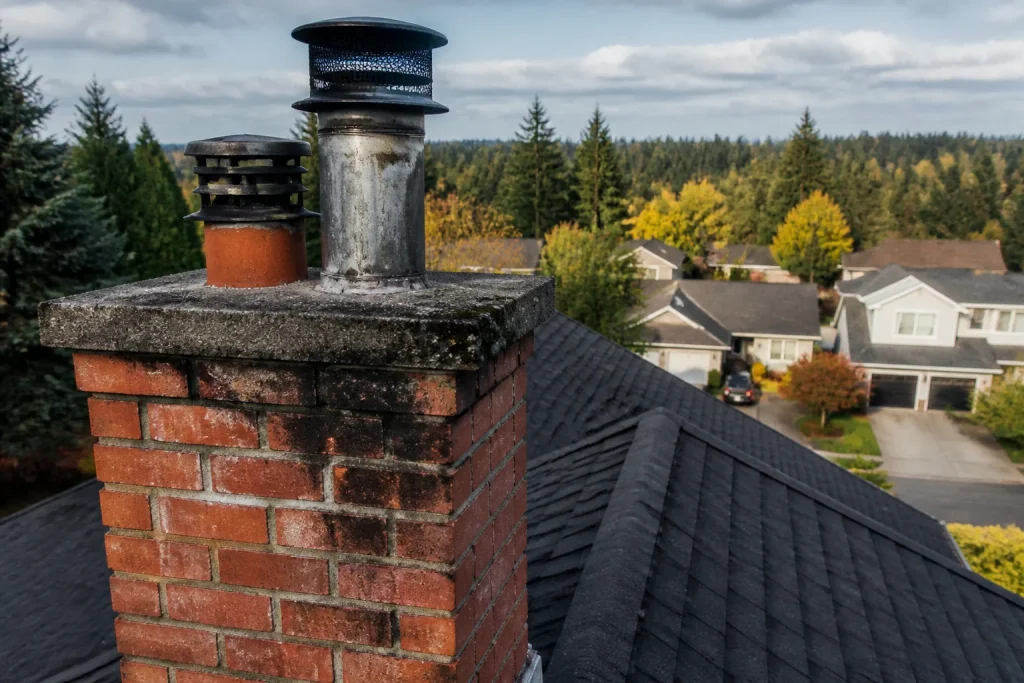
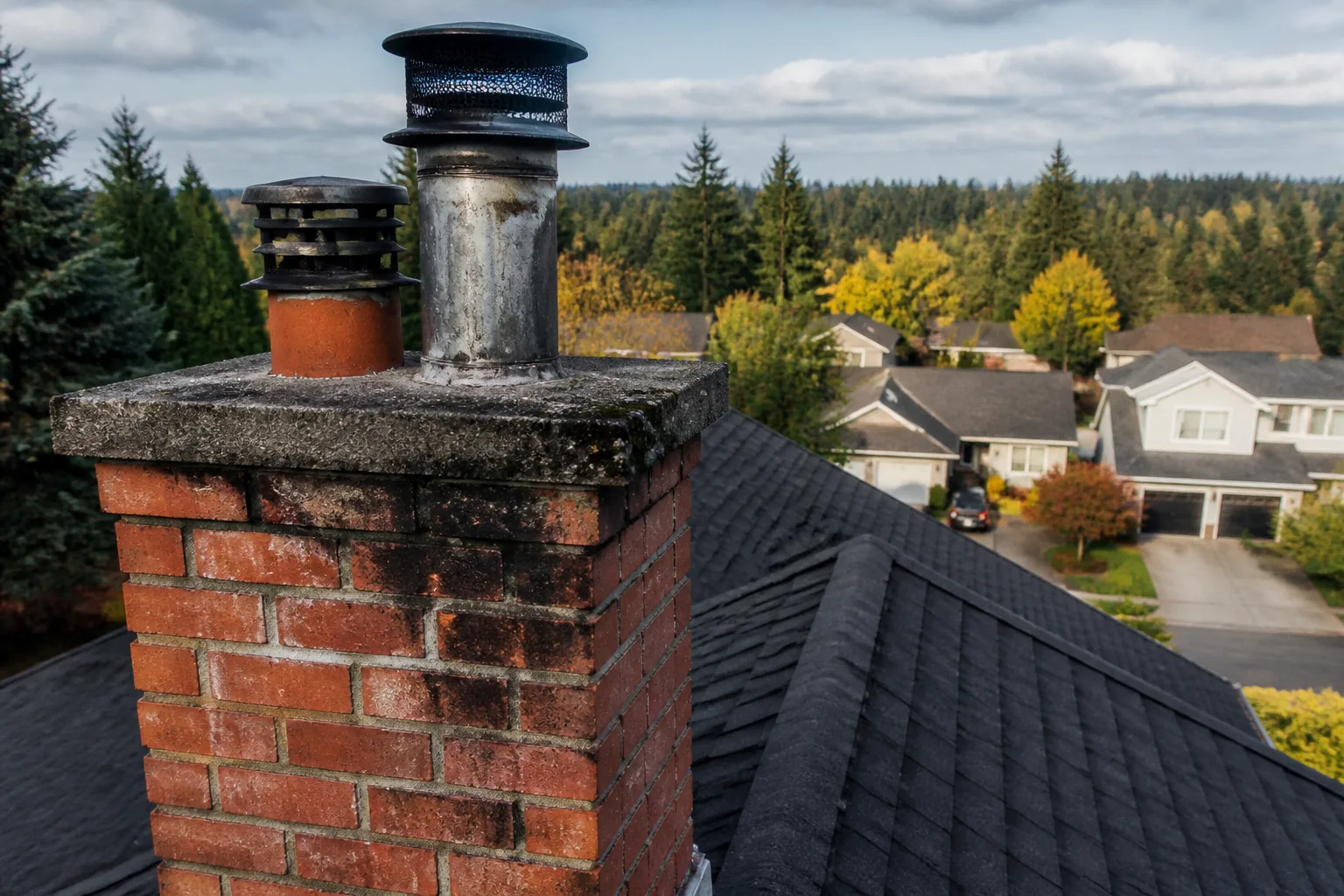
- White staining on the brick or mortar exterior. This is efflorescence, not cosmetic. It means water is moving through the masonry right now, pulling mineral salts to the surface as it dries.
- Spalling brick or crumbling mortar joints. When masonry flakes and pits, water has been freezing and thawing inside it. This is structural, not a cleaning issue.
- A cracked crown or a cap that’s gone missing. Both let water straight into the flue. A cap from Gelco or Famco is what stops that path before it starts.
- A rusted firebox or damper plate. Rust inside the firebox is moisture that’s been sitting there, not simply age.
If more than one structural sign is on your list, a cleaning won’t resolve it. A chimney sweep removes what’s blocking the flue; a camera inspection finds out whether the flue itself is intact.
Why does white staining on the outside of the chimney matter?
White staining on your chimney’s exterior isn’t a cosmetic issue. It’s efflorescence, and it means water is migrating through your masonry right now. The brick absorbs moisture, and as it dries from the outside in, it pushes dissolved salts to the surface, where they crystallize into that chalky white film. Seeing it in Lynnwood, with our wet fall and winter, is your chimney telling you the crown or cap isn’t shedding water the way it should.
What most people do is scrub it off. What that doesn’t do is stop the moisture getting back in. The white returns because the source never left. Left alone, water inside masonry freezes on cold nights, expands, and flakes the brick face. That’s spalling, and it’s the stage where a repair turns expensive.
We look at the top of the chimney first for exactly this reason. A cracked crown lets water pool at the flue opening. A missing or undersized cap lets rain fall straight down the flue. Both are fixable, and fixing them before water reaches the masonry saves you from rebuilding it later. When we set a crown, we work with Copperfield products because they’re made for this exposure and hold up to our freeze-thaw cycles better than a mortar skim will.
How is carbon monoxide risk different with a gas fireplace insert?
A partially blocked vent on a gas fireplace insert can send carbon monoxide into your home without producing a single puff of visible smoke. That’s the part that surprises people. A wood fire usually shows you a problem. A gas insert can run with a pinched flue and look completely normal while combustion gases back up.
The vent on an insert has to be open and clear for proper draft. A nest, fallen debris, or a disconnected liner changes the draw enough that combustion becomes incomplete, which raises CO output. You won’t smell it and you won’t see it. That’s why a gas insert still needs an annual inspection, even though it makes no creosote.
- Check your carbon monoxide alarms. Test them on the same schedule you change the batteries.
- If you notice soot streaks near the insert or a smell of exhaust in the room, stop using it and get it looked at.
- Any insert with a flue that hasn’t been inspected needs one, especially if you don’t know when it last was.
An inspection here is about confirming the vent path from the firebox to the crown is intact. If you suspect a problem, don’t run the insert until a trained technician has checked it. Combustion gas is not something to reason your way through. Our technicians have up to 12 years of experience and know the insert venting systems common in Lynnwood homes.
Why does your fireplace smell like a campfire in spring?
If your chimney smells like last summer’s campfire every humid spring, the culprit is usually damper seal condition, not leftover ash. Creosote and soot on the flue walls absorb moisture from our damp air. When the air warms and gets heavy, that stored smell releases into the room, even if the fireplace hasn’t been used in months. A sweep cleans the flue, but if the odor returns, the seal at the damper is the next thing to check.
A damper that doesn’t close tight leaves a path for moist air to move down into the firebox. That raises humidity in the flue, revives the creosote smell, and adds to the moisture problem already stressing your masonry. A rusted damper plate is the same story with a visible marker: rust means it’s been wet, and it’s been wet for a while.
This is one of those cases where the fix is diagnostic, not automatic. Sometimes the damper just needs adjustment. Sometimes the plate is warped or rusted through and needs replacement, and we’d look at Olympia Chimney components for that. Our point is that we tell you which one you have after looking, not before. A chimney inspection tells you exactly what’s holding the smell and whether a cleaning, a damper repair, or nothing at all is the right move. Sometimes “nothing at all” is the honest answer, and we’ll say so.
What does an undocumented last sweep date actually tell you?
If you can’t find out when a chimney was last swept, treat that unknown as a risk signal. You’re not just missing a date. You’re missing the only record that would tell you whether the flue has been maintained, what condition it was in, and whether a repair was ever flagged and skipped. That history is what a chimney repair decision hangs on.
Homeowners often assume a cleaning and an inspection are the same appointment. They aren’t.
- A cleaning removes soot and creosote from the flue. Necessary, but it doesn’t tell you anything about the condition of what it cleaned.
- A Level 1 inspection confirms the flue is intact, the joints and connections are sound, the cap is in place, and the venting is unobstructed. It’s the check that says whether the chimney is safe to use.
If you’re buying or selling a Lynnwood home, or you just inherited a fireplace with no paperwork, the inspection comes first. We offer inspection as a standalone service, so you’re not pushed into cleaning you may not need. That matters here because a lot of homes have gas or pellet setups that don’t build creosote the way wood does, yet still need their vent path confirmed. Knowing which you’re dealing with is the difference between a useful visit and a wasted one.
When should you call a pro instead of booking a sweep?
Call us for a diagnostic visit, not a cleaning, when the symptoms look structural. Efflorescence, spalling brick, a cracked crown, a missing cap, or rust in the firebox all point to water and venting problems that sweeping doesn’t touch. Those are the cases where a cleaning alone leaves the real issue in place. The same goes for a gas insert with a vent you can’t confirm is clear, or a chimney with no known service history. A trained technician should look at anything involving a compromised flue, a masonry failure, or the potential for combustion gas indoors; we don’t suggest diagnosing those from a list.
From the firebox to the crown, we handle the whole system: sweeping, inspection, fireplace repair, chimney repair, and cap and crown work. When a flue needs resurfacing rather than replacement, HeatShield ceramic resurfacing restores it without a full liner, and when a liner is the right call, we install DuraFlex flexible liner systems for deteriorated or unlined flues. The right answer depends on what the camera shows, and we’ll show it to you.
Related services in Lynnwood: Chimney Sweep Lynnwood for sweep and inspection, and our fireplace and chimney repair pages for the structural side.
The Bottom Line
Not every chimney symptom is a creosote problem, and that’s the whole point. Oily odors and sluggish draw usually mean buildup and need a sweep. White staining, spalling brick, cracked crowns, rusted dampers, and a blocked insert vent mean water or venting trouble that cleaning won’t fix. In Lynnwood’s wet climate, the structural signs show up fast, and the spring campfire smell is usually about damper seal, not dirt. If you’re not sure which category your symptoms fall into, that’s the moment to call. One inspection sorts creosote from structural and tells you what’s actually going on. If you’re in Lynnwood and need a free estimate, Chimney Sweep Lynnwood is here to help: call (855) 550-7286. We answer 24/7. Fast dispatch from 7am to 7pm, Sunday through Friday.
Frequently Asked Questions
Once a year for a wood-burning fireplace you use regularly, checked each season. Heavy use means closer to the frequent end. Gas inserts don’t build creosote but still need an annual vent inspection. Call (855) 550-7286 for an exact recommendation after we see the flue, estimates are free.
No. White staining is efflorescence, which means water is moving through the masonry, so you likely need cap or crown work, not a sweep. It’s a moisture fix, not a creosote one. Call (855) 550-7286 to book an inspection, estimates are free.
Yes. A partially blocked vent can raise CO output without visible smoke, which is why a gas insert still needs an annual inspection. If you smell exhaust or see soot near the insert, stop using it and have it checked. Call (855) 550-7286.
Dry creosote on the flue walls absorbs damp air and releases odor, and a damper that doesn’t seal tight makes it worse. A sweep may help, but if the smell returns, the damper seal needs checking. Call (855) 550-7286 for a look, estimates are free.
Written by the team at Chimney Sweep Lynnwood.
Need Chimney Cleaning Help?
Call Chimney Sweep Lynnwood - the local pro we connect you with is licensed and insured, with free written estimates in Lynnwood.
(855) 550-7286