
Last updated November 25, 2026
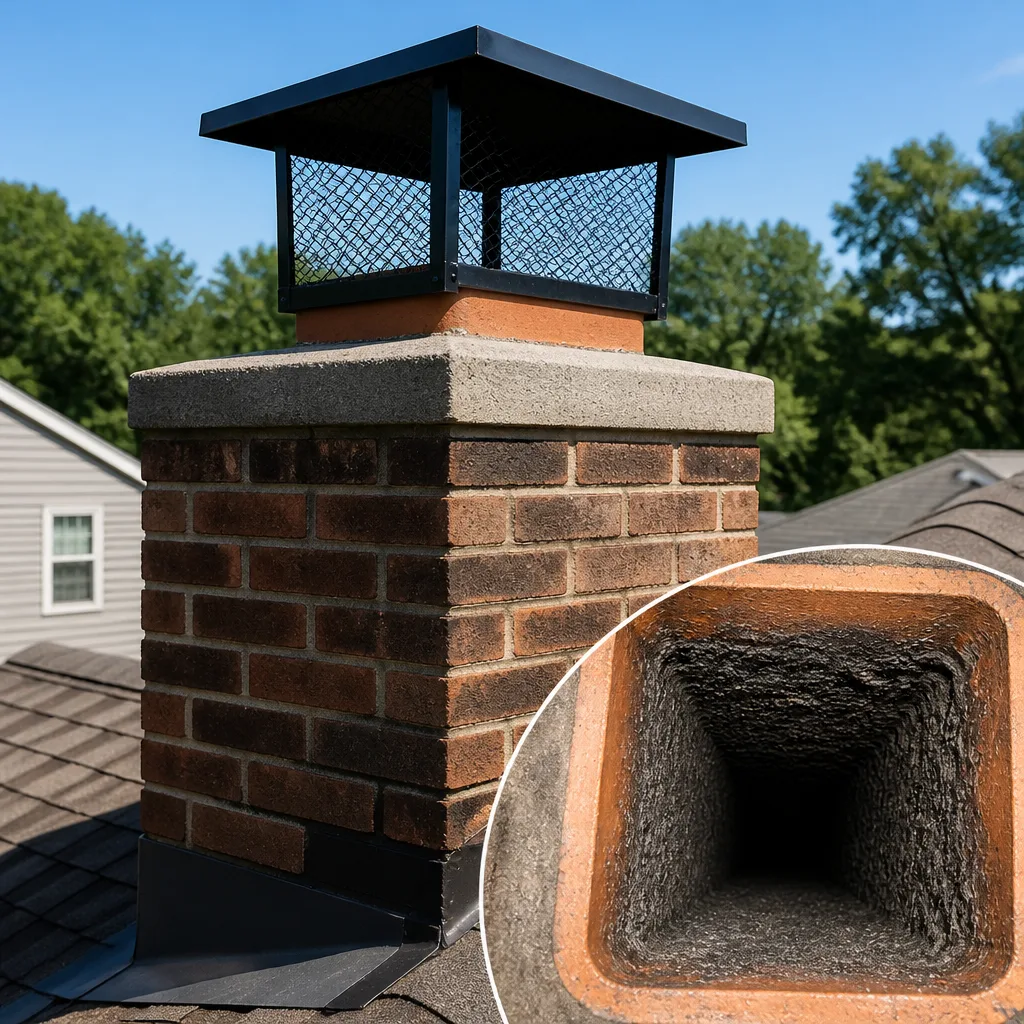 Sweep & inspection
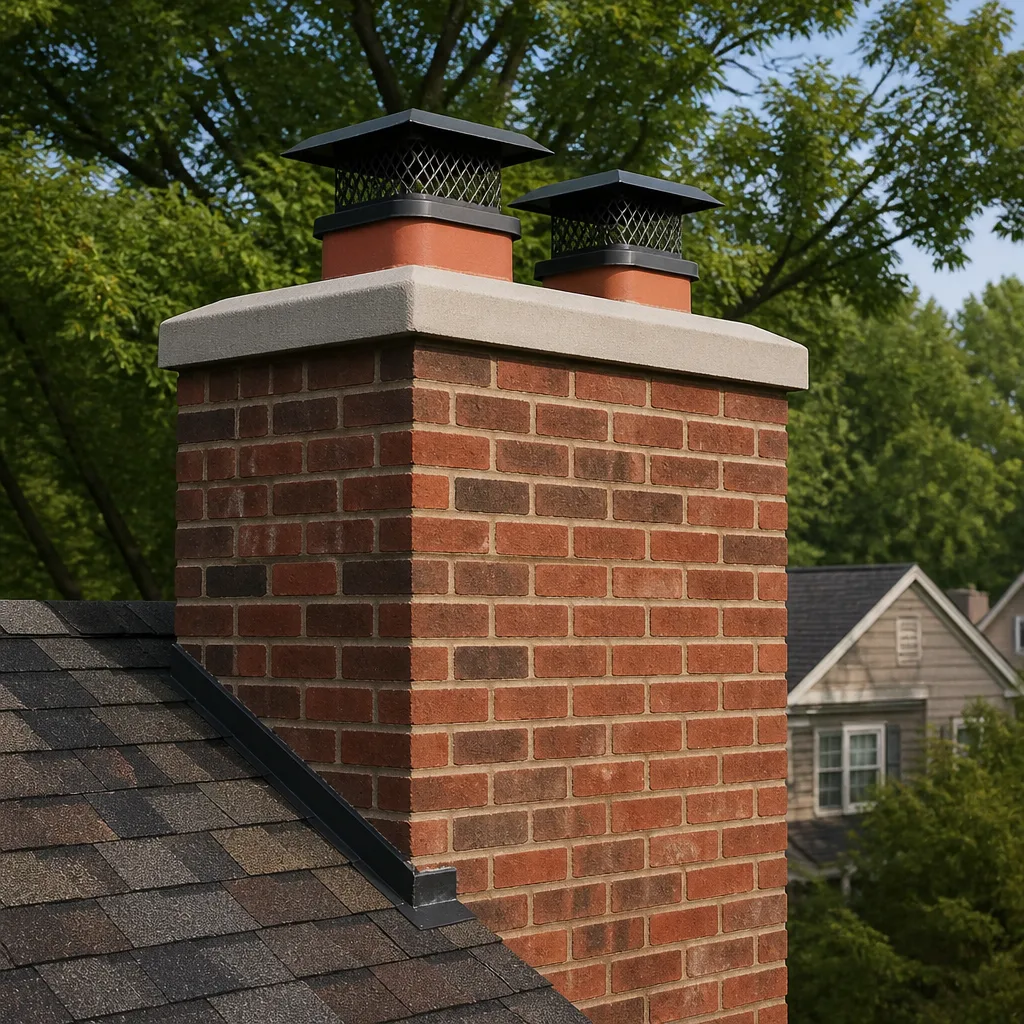 Caps & crowns
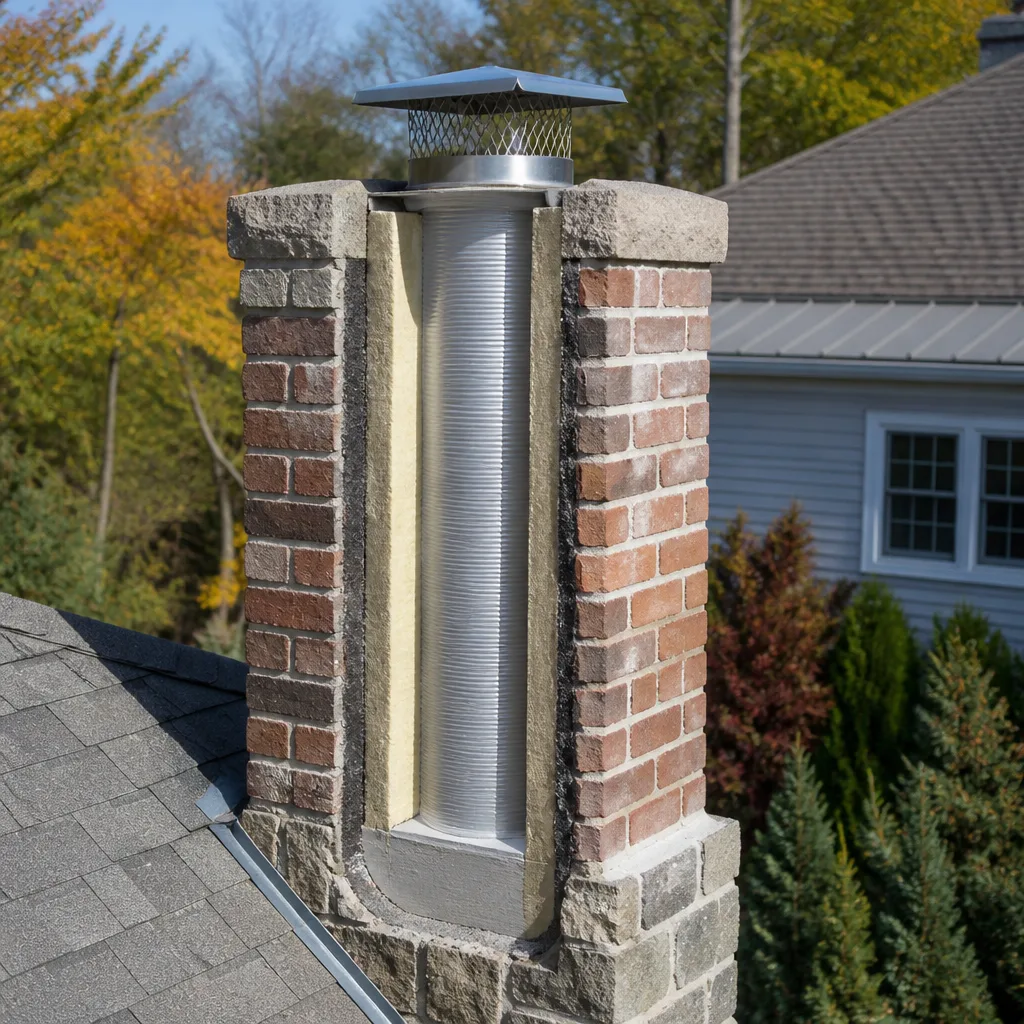 Flue relining
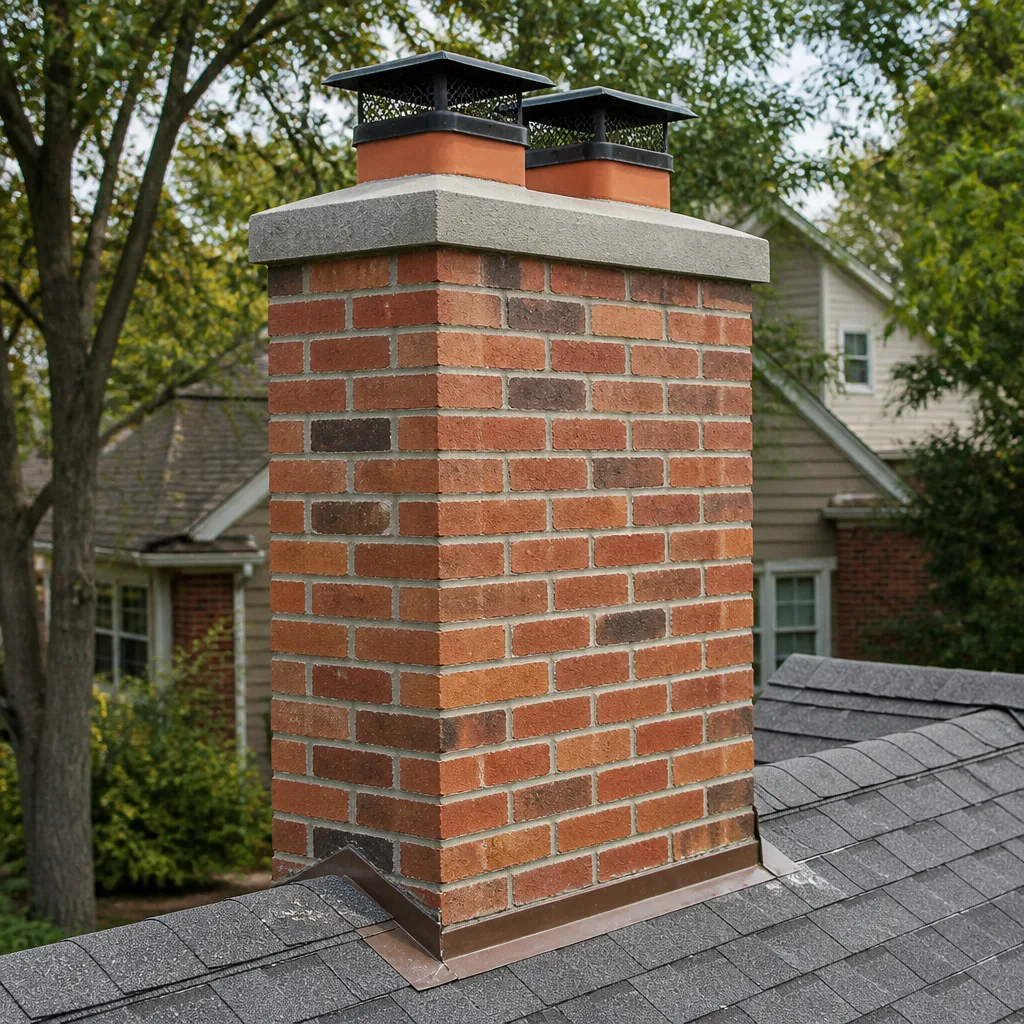 Masonry repair
 Gas fireplace service
Level 1 sweep and inspection to the NFPA 211 annual standard - flue, crown, cap, and flashing checked and photographed
Chimney sweep logs do not sweep chimneys. They loosen some creosote - which then falls where a brush and vacuum still have to collect it.
DIY vs Professional Chimney Cleaning: The Lynnwood Homeowner’s Decision Guide
Most homeowners who search “can I clean my own chimney” already know a brush kit exists at the hardware store. What they don’t know is that the brush reaches the flue and stops there. It cannot see the smoke chamber shelf above the damper, evaluate whether the clay tile liner has cracked under a season of heat cycling, or tell you whether your draft is pulling hard enough to keep carbon monoxide out of the living room. The real debate isn’t cost against convenience. It’s about access: what a homeowner can physically reach and evaluate versus what a professional can. This guide lays out exactly where DIY competence ends and professional access begins, using what we see in Lynnwood homes burning Pacific Northwest wood.
Quick Answer
A homeowner can reasonably handle exterior visual checks, cap debris removal, ash disposal, and firebox wiping with the right safety protocol. Everything past the damper, including creosote removal from the smoke chamber, liner inspection, and draft measurement, requires professional tooling. DIY cleaning without an inspection is a genuine liability, not a savings, because disturbing loose deposits in a damaged flue can expose cracks that then admit embers and heat into the surrounding chase.
Styles & brands we work with
- Sweep & inspection
- Caps & crowns
- Flue relining
- Masonry repair
- Gas fireplace service
Table of Contents
- What a Prepared Homeowner Can Legitimately Do
- The Technical Access Limits of Consumer Brush Kits
- Why DIY Cleaning Without Inspection Is Riskier Than No Cleaning
- The Tools Professionals Use That Have No Consumer Equivalent
- The Four-Variable Decision Matrix
- Lynnwood Climate, Wood, and Housing: Why Local Factors Matter
- What Happens After a Cleaning: Inspection and Repair Paths
- How Often Is Sweeping Actually Needed?
What a Prepared Homeowner Can Legitimately Do
We want to be clear about this because the chimney trade sometimes overreaches. There are real tasks a careful homeowner can complete without a sweep appointment, and doing them well protects the system between professional visits. The key word is external and accessible. Anything requiring a ladder for a roofline check, or reaching inside the flue, crosses into professional territory.
The tasks that genuinely fall within homeowner scope:
- Cap debris removal. A stainless cap with a mesh screen traps leaves, twigs, and the occasional bird. From a safe position (never a wet or steep roof), a homeowner can look at the cap with binoculars and identify visible blockages. Removing a twig with a long pole from the ground is reasonable. Climbing onto a roof to lift a cap is not.
- Exterior visual inspection. Walk the house. Look at the chimney from ground level and through binoculars. Note spalling brick, efflorescence, cracked or missing mortar joints, rust streaks under the cap, and a leaning stack. Photograph what you see. That record is useful at the next professional inspection.
- Ash removal. Once the firebox is fully cool (give it several days after the last fire, not hours), shovel ash into a metal container with a tight lid and set it outside on a non-combustible surface. Never vacuum warm ash into a household vacuum. Ash should sit at roughly one inch depth to insulate the firebox floor; removing all of it every time is unnecessary.
- Firebox wiping. A damp cloth on cool firebrick removes surface soot. Do not scrub firebrick with an abrasive; the soft brick is designed to erode slowly and abrasives accelerate that.
- Damper operation check. Open and close the damper and note whether it moves freely or sticks. A stuck-open damper is an energy loss; a stuck-closed damper is a smoke-in-the-room problem. Note the behavior for your inspector.
What doesn’t belong on this list, even for a handy homeowner: anything involving the flue interior, the smoke chamber, the crown, or the roof. Those are the areas that require both training and tools, and they are where a system fails. If you’re ready to have those areas examined directly, our chimney sweep service is the entry point most Lynnwood homeowners start with.
The Technical Access Limits of Consumer Brush Kits
The consumer chimney brush kit is a well-designed tool for a specific job: removing loose, flaky creosote from a straight, standard-dimension flue. Many Lynnwood chimneys aren’t that. Between the 1960s split-levels, the 1970s ranch homes, and the more recent construction, the flue geometries vary widely, and the brush kit assumes a straight shot the chimney may not provide.
Rod flexibility is the first limit
Consumer kits use fiberglass or polypropylene rods in 4- to 6-foot sections that screw together. They’re semi-rigid by design so they don’t buckle inside the flue. On a straight flue, that’s fine. On a flue with a slight offset (common where the fireplace and the chimney chase don’t align perfectly), a semi-rigid rod binds. A bound brush doesn’t clean; it polishes. It spins against the same spot while the deposits on the opposite wall sit untouched.
Brush sizing is the second limit
A brush must make full contact with all four flue walls to do its job. Too small and it misses creosote on the wide walls. Too large and it jams, which is how homeowners crack clay tile. Standard consumer brushes are sized for nominal flue dimensions, but older Lynnwood flues are often slightly out of square or built with non-standard tile. A professional kit carries multiple brush diameters and can be tuned to the actual flue. A homeowner with one kit has one size.
The smoke chamber is the third limit
Above the damper sits the smoke chamber, a corbelled funnel that transitions the wide firebox opening to the narrower flue. Most residences built before the 1990s have a smoke chamber with a rough, corbelled interior that accumulates deposits on ledges and shelves you can’t see from below. In a typical Lynnwood fireplace burning seasoned but not always perfectly dry Pacific Northwest wood (fir, hemlock, maple, the occasional alder), the smoke chamber is where the thickest, stickiest creosote builds up season after season. It’s also where the consumer brush has no chance. A straight flue brush can’t reach into the shelf geometry of a corbelled smoke chamber. A sweep cleans the smoke chamber with dedicated hand tools after cleaning the flue, and then inspects the shelf with a camera.
This is why we frame the DIY question as one of access, not effort. A homeowner willing to spend a Saturday with a brush has done nothing wrong. They’ve simply hit a ceiling that only tools and access can lift.
Why DIY Cleaning Without Inspection Is Riskier Than No Cleaning
Here is the counterintuitive point that drives this whole guide. A dirty chimney that’s never touched is a hazard of one kind: creosote accumulation. A chimney that’s been brushed by someone without the ability to inspect it is a hazard of a different kind, because cleaning has now disturbed the deposits that were previously sitting harmlessly against the walls, and no one has verified the walls underneath.
Clay tile liners crack. It’s expected; they’re mortared in place and thermally cycled through thousands of hours of heating and cooling. A hairline crack that sits under a bed of soot and glazed creosote is not yet passing embers through to the surrounding wood framing or masonry. Brush it clean, and the crack is now exposed. The next fire sends embers and hot gases directly through the gap. What was a slow accumulation hazard has become an immediate one.
This isn’t a hypothetical risk in Lynnwood. The mix of original clay-tile flues in mid-century neighborhoods and the long, cool heating season here (October through April in a lot of years) creates exactly the cycling pattern that cracks tile. Add a wood species that produces more or less creosote depending on moisture content, and the risk shifts year to year.
The same logic applies to the smoke chamber. Corrosion, spalling, and parging loss can be hidden in the shelf geometry for years with no visible sign from the firebox. A homeowner brush doesn’t reveal it. A camera does.
None of this argues against cleaning. It argues for cleaning that comes with inspection attached, so that what’s exposed is examined in the same visit. That’s why our standard sweep includes camera inspection and a photo report; the cleaning and the verification are one job, not two.
The Tools Professionals Use That Have No Consumer Equivalent
The gap between a homeowner brush kit and a professional sweep is not one of effort or care. It’s tooling. Here’s what we carry that has no equivalent in the consumer market, and what each one lets us do.
Rotary cleaning systems
Where consumer brushes are pushed and pulled manually, professional sweeps use rotary systems with a powered whip or chain head on a flexible rod. The head spins against all four walls simultaneously and applies a controlled, consistent contact pressure. This matters for glazed creosote (Stage 3, the hard, shiny, tar-like deposit that forms when wood burns cool or wet), which a hand brush cannot remove. Rotary systems can, often without chemical pre-treatment. When they can’t, we know it during the sweep and can schedule the appropriate follow-up rather than telling a homeowner to “try again next year.”
Chimney cameras with pan-and-tilt capability
A fixed camera at the end of a rod sees what it’s pointed at. A pan-and-tilt camera sees the walls, the joints, the offsets, the smoke chamber shelf, and the top of the crown, in real time, as the technician steers it. We use it to confirm what we suspect and to rule out what we don’t. Pan-and-tilt is the difference between “your liner looks okay” and “here is a crack at the fourth joint on the north-facing wall, and here is the video.” Homeowners should expect to see the footage, not just a summary. If a homeowner is told they need thousands of dollars of liner work, the camera footage is how they verify it, and any professional who resists showing it should not be hired.
CO-calibrated draft meters
Draft is the chimney’s ability to pull combustion gases up and out, and it depends on flue height, cross-sectional area, temperature differential, and how tight the house is. A weather-tight Lynnwood home (new windows, wrapped insulation, kitchen exhaust fans, dryers) can develop negative pressure that overwhelms a fire’s natural draft, and the result is spillage: smoke, and carbon monoxide, into the living space. A CO-calibrated draft meter measures this directly. A sweep who checks draft and finds a negative pressure problem can recommend a fix (often a top-sealing damper or a makeup air adjustment). A sweep who doesn’t check draft is guessing.
Specialty hand tools for the smoke chamber
Smoke chamber cleaning happens after the flue is done, with tools designed for the angled shelf geometry: scraper blades, pivoting heads, and extendable arms that reach the corners of the corbel. There is no consumer version of these tools because there is no consumer market for them.
When a homeowner’s flue has damage beyond cleaning, the repair conversation uses trade-specific materials. We work with chimney repair solutions like HeatShield ceramic resurfacing for flue restoration, which can repair certain deteriorated clay tile interiors without full relining. Knowing when HeatShield is the right call versus when a DuraFlex flexible liner is the right call is where diagnostic skill shows up.
The Four-Variable Decision Matrix
Whether DIY cleaning is a reasonable interim measure or a liability depends on four variables. Read through them honestly, and if any one of them points toward “professional,” that’s the answer.
Variable 1: System age and liner condition
Homes built before roughly 1980 in Lynnwood have clay tile liners or, in earlier construction, an unlined chase. Clay tile has a service life; cracks accumulate with heat cycling. If the liner has never been camera-inspected, DIY cleaning is a liability because you don’t know what’s underneath the deposits you’re disturbing. Modern factory-built systems (metal liners inside a metal chimney) have their own inspection needs and rarely tolerate homeowner poking. If the liner condition is unknown, professional inspection comes first, and cleaning happens during that visit.
Variable 2: Last professional inspection date
If a chimney has been inspected within the last two years and the report says the liner is intact, DIY cleaning between inspections is defensible as a stopgap. Beyond two years, or if no inspection has ever been done, the DIY window is closed. The inspection isn’t just a regulatory box; it’s the diagnosis that makes any subsequent cleaning safe.
Variable 3: Fuel type and moisture content
Seasoned wood (under 20% moisture, split, stacked, covered, and dried for at least a season) produces flaky Stage 1 and 2 creosote that a brush can remove. Wet or “green” wood, given the cool, humid Pacific Northwest fall we get, produces Stage 3 glazed creosote that a brush polishes rather than removes. If you’ve been burning wood that sizzles or hisses at the ends, assume your creosote profile is glazed and plan on a professional sweep with rotary tooling. Wood that’s been properly dried and stacked, in a fireplace used moderately, is the only profile where DIY cleaning is a reasonable interim measure at all.
Variable 4: Burn frequency
If you burn a fire a few times a season for atmosphere, deposits accumulate slowly. If you burn multiple fires a week through the heating season, deposits accumulate fast, and the fire risk (Stage 3 creosote is what fuels chimney fires) rises correspondingly. High-frequency burning plus unknown liner condition plus wet wood is the combination that sends homeowners to us for repair after a small chimney fire they didn’t even know happened. Damaged flues often show it in the form of spalling tile and parging deterioration, and the “small fire” can do significant damage in a matter of minutes.
When the matrix tilts toward professional, our Chimney Sweep Lynnwood team handles the sweep, inspection, and any repair that comes out of it as one path, not three separate appointments. From the firebox to the crown, the system is examined as a whole.
Lynnwood Climate, Wood, and Housing: Why Local Factors Matter
Chimney problems are local. A sweep in Phoenix and a sweep in Lynnwood see different failure patterns, and the difference is worth understanding because it changes what DIY can and can’t handle here.
The long, wet heating season
Lynnwood’s heating season stretches from October well into spring in most years, which means a fireplace used regularly runs a lot of cycles. Each heating cycle expands the liner and the masonry; each cooldown contracts them. That cycle count is one driver of tile cracking. It also means a homeowner who sweeps once at the start of the season may accumulate deposits through the season and never touch them again until the following fall. The interim cleaning is exactly what fills that gap, and if a homeowner skips it because “we had it swept in October,” they’ve reintroduced the accumulation problem by March.
Wood species and moisture
Douglas fir, western hemlock, bigleaf maple, and red alder are the firewoods most Lynnwood homeowners burn. Fir and hemlock are common and reasonably heat-dense, but they also deposit more creosote than hardwoods when burned before fully seasoned. The wet coastal-influenced climate here means wood needs a full dry season before it’s ready, and wood stacked uncovered or stored under a tarp that holds moisture will smolder. Smoldering fires are creosote factories. If you have any question about your wood, a moisture meter is a $20 tool worth owning.
Housing stock
Lynnwood’s housing spans a wide range of eras, and each brings its own chimney concerns. Mid-century and 1970s homes often have original clay tile liners that are now well past their designed service life and prone to cracking. Homes in neighborhoods like Alderwood, Martha Lake, and Meadowdale reflect a mix of these older original stacks and newer installations that have their own specific inspection needs. Newer construction with tighter envelopes is more vulnerable to negative pressure draft problems, which a CO meter catches and a brush cannot. If you’ve added weatherstripping or new windows, your draft could have changed without anyone noticing a difference in how the fire looks.
Water damage as the slow failure
Not a chimney fire story, but just as expensive: water reaching the masonry. Around Lynnwood, the fall and winter rain exposure is significant, and a cracked crown or a failing cap lets water into the chimney structure, where it spalls brick, degrades mortar, and rusts the damper assembly. The cap and crown are the components most exposed to weather and the most commonly deferred. A homeowner doing exterior visual inspection (Variable 1 above) can catch early signs: efflorescence, rust streaks, spalling brick at the crown. Catching it early is what prevents the repair from becoming a rebuild. Our fireplace repair work often starts with water damage we can trace back to a cap or crown issue that was visible years earlier.
What Happens After a Cleaning: Inspection and Repair Paths
A professional sweep ends with a report, not just a clean flue. Here’s what the sequence looks like, so a homeowner knows what to expect and what questions to ask.
- Sweep. Rotary cleaning of the flue, then hand tooling of the smoke chamber, then cleaning of the firebox and damper area. The technician works from the top down or the bottom up depending on access and cap configuration.
- Camera inspection. A pan-and-tilt camera runs the full flue and the smoke chamber. The technician documents cracks, gaps, offsets, coronas, and the crown condition with footage you can see.
- Draft and CO check. A CO-calibrated draft meter tests the flue’s pulling power under realistic conditions. If the reading shows negative pressure or inadequate draft, that’s a conversation, and it’s often a conversation about the house as much as the chimney.
- Findings and options. Minor issues (a hairline crack that isn’t structural, a slightly degraded crown topcoat) are often deferred and tracked, with the homeowner given a clear sense of what to watch for. Structural issues (visible gaps in tile joints, missing tile, failed parging, crown damage with water intrusion) get a written estimate with options. A HeatShield ceramic resurfacing is often appropriate for flue restoration where a full DuraFlex reline isn’t yet necessary. Both are legitimate options in different conditions, and part of what the report should do is explain which one fits and why.
- Preventive work. If the cap is failing or missing, or the crown is cracked, we install a replacement. Gelco, Olympia Chimney, and Famco caps and components are the trade brands we work with because they’re designed for the specific job of keeping weather out of a masonry chimney. A cap replacement is one of the least expensive interventions with the biggest long-term return on the chimney structure.
A standalone inspection is also available if you want a diagnostic read without a sweep. Some homeowners come to us that way, particularly after a home inspector flags a concern. We don’t bundle a sweep into an inspection to increase the ticket. If the flue is clean, we tell you so.
Our technicians have up to 12 years of experience and work with the trade materials above because they hold up in real installs. A flat-price sweep is agreed before booking, and the camera inspection and photo report are included with the sweep itself.
How Often Is Sweeping Actually Needed?
The short answer is that it depends on how much you burn, what you burn, and how your flue is built. That said, here is the practical guidance we give Lynnwood homeowners:
- Annual sweep and inspection: the standard for anyone who burns regularly through the season, particularly if you’re burning softwoods or haven’t had a camera inspection done in the past two years. An annual cadence catches liner cracks before they become a fire risk.
- Twice per season: if you burn hard (multiple fires per week through the heating season) or burn any amount of softwood in an older masonry chimney. A mid-season check, or an interim homeowner brush if the liner condition is confirmed good, closes the gap between the October sweep and the spring shutdown.
- Every two years: defensible for a low-use fireplace with a metal liner and a recent inspection showing no issues. Less so for a clay-tile flue of any age.
- Before every heating season if the system is new to you: a home you recently purchased, or an older house with unknown service history, deserves one professional inspection at the start of ownership. That inspection tells you what you’re dealing with, and everything else can follow from it.
One pattern worth noting: the homes that end up needing the most expensive repair work are usually not the ones burning the most wood. They’re the ones where regular inspection was skipped for five or ten years because “the chimney seemed fine.” The things that degrade a chimney quietly (crown cracking, cap rust, liner spalling, water intrusion) are exactly the things an annual inspection catches at the cheapest possible repair point.
Not sure where your chimney stands? The fast way to find out is a sweep and inspection together. Call (855) 550-7286. We answer 24/7. Fast dispatch from 7am to 7pm, Sunday through Friday.
Common Mistakes to Avoid
- Cleaning without inspecting. The single biggest mistake, and the one this whole guide exists to prevent. Brush first, inspect second, and you’ve potentially exposed a crack you didn’t know existed. Inspect and sweep together, and the liner condition is verified before the fire is relit.
- Burning wood that isn’t dry enough. Across Lynnwood’s wet fall and winter, wood stacked under a tarp that traps moisture, or wood brought in from outside and burned after only a few weeks of drying, is the fastest route to heavy glazed creosote. Moisture meters are cheap; liner replacement is not.
- Skipping the cap and crown check. Caps rust, mesh tears, and crown tops crack and spall. These are the primary ways water gets into a masonry chimney, and they’re visible from the ground. The cap and crown are preventive maintenance, not cosmetic.
- Assuming a clean flue means a healthy flue. A brush removes deposits; it doesn’t evaluate draft, doesn’t reveal cracks under former deposits, and doesn’t measure CO. A sweep without inspection is a partial service.
- Doing roof work to “just get a better look.” Falls from single-story roofs are the most common injury in the trade. Binoculars from the ground are sufficient for a homeowner. Reach for the ladder only if you’re trained and on dry, safe footing, which most people should not assume.
- Burning trash, wrappers, or treated wood. Anything outside of seasoned, natural firewood introduces chemicals into the flue and accelerates the creosote profile. If your chimney smells like burning plastic after a fire, something else was in the firebox.
- Trusting a quote without camera evidence. If a technician recommends a full reline or masonry repair without showing you the camera footage that justifies it, ask for it. If you don’t get it, get a second opinion.
See the difference
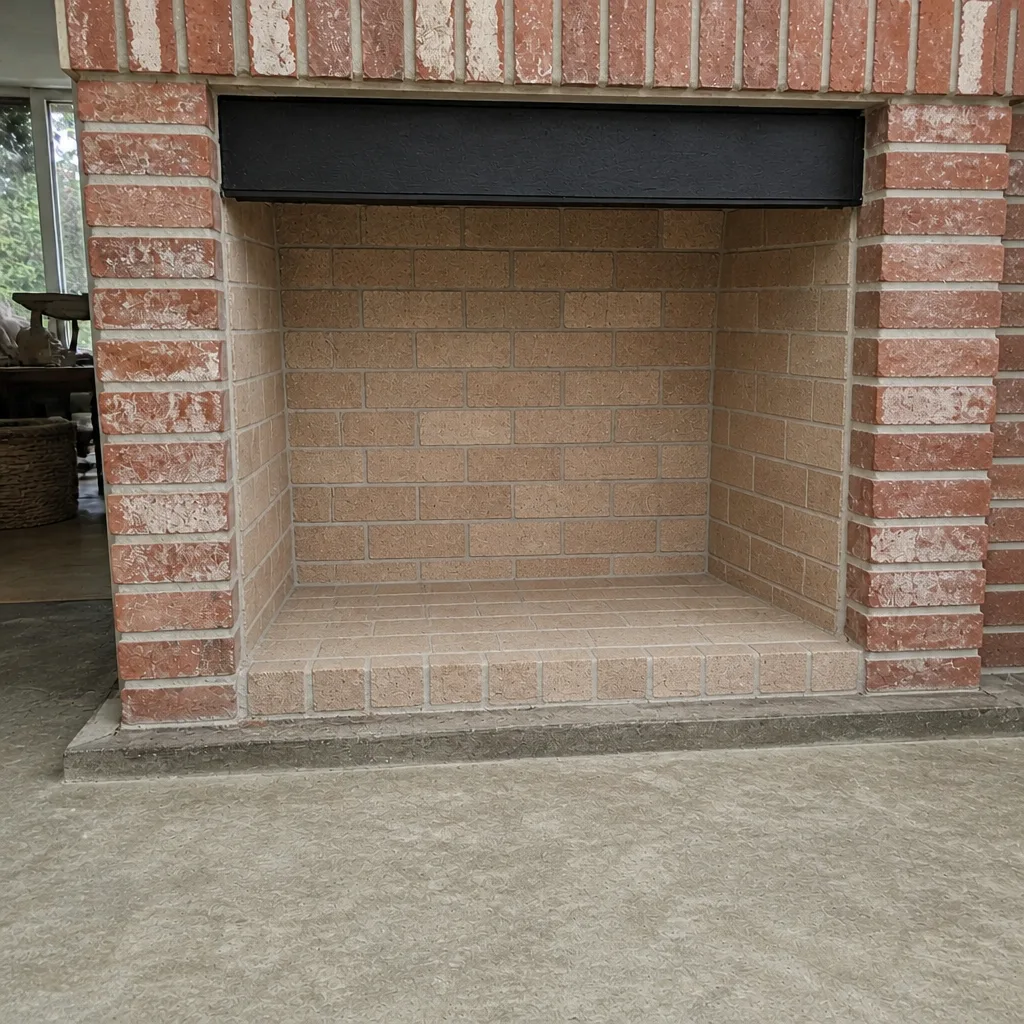
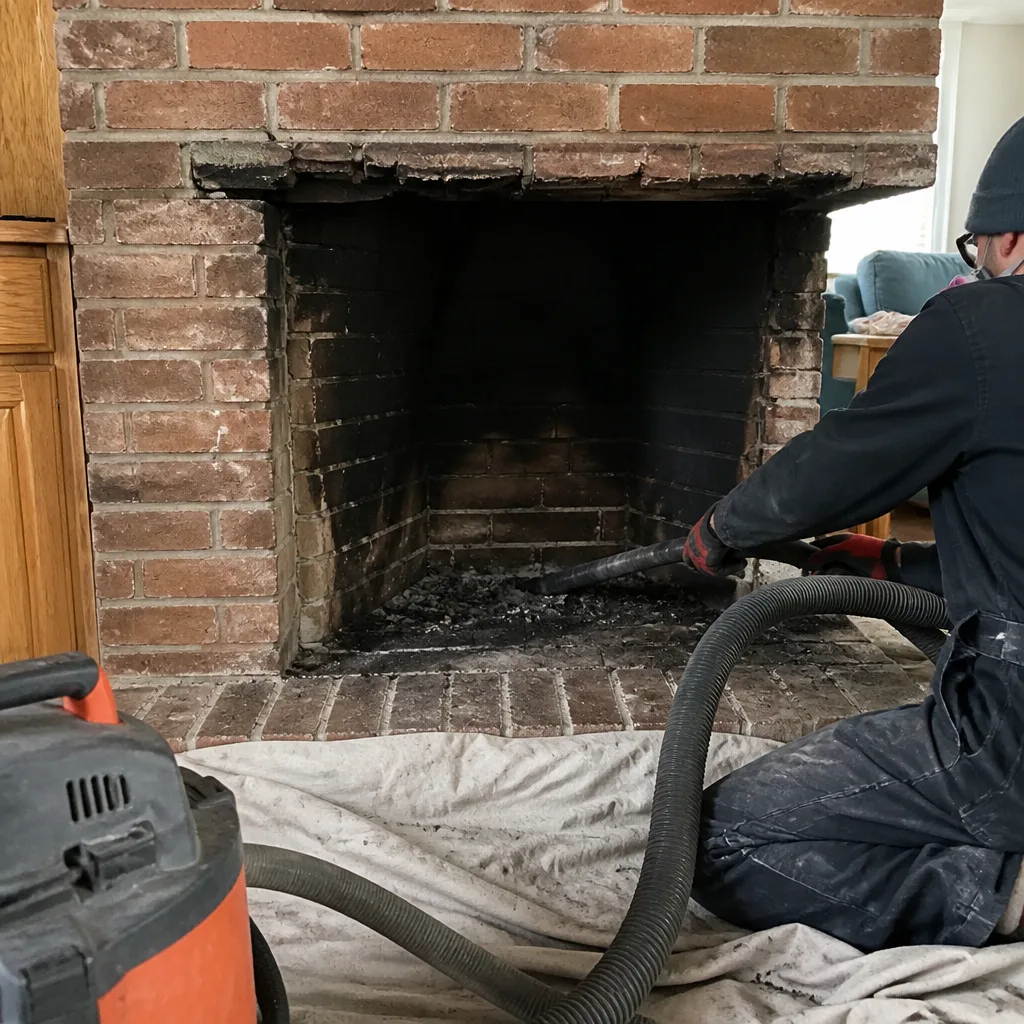 Before
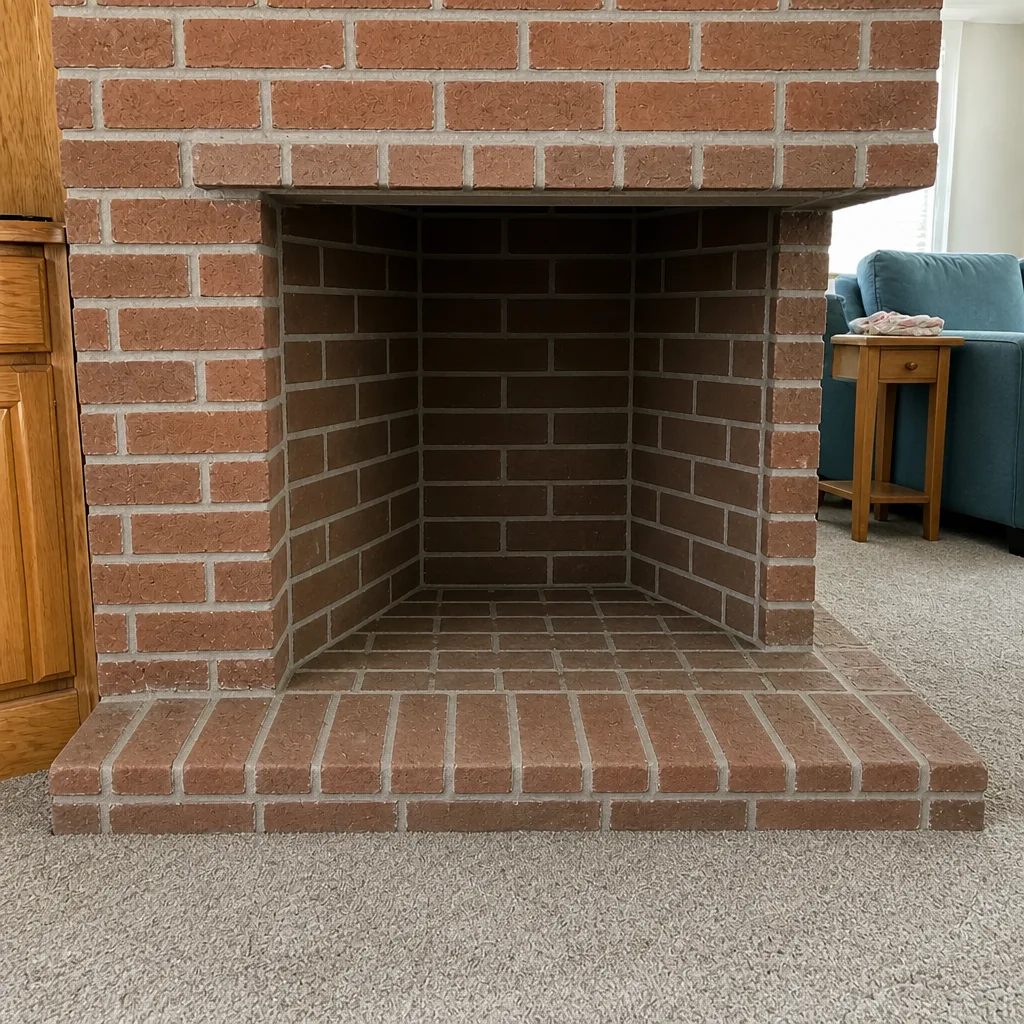 After
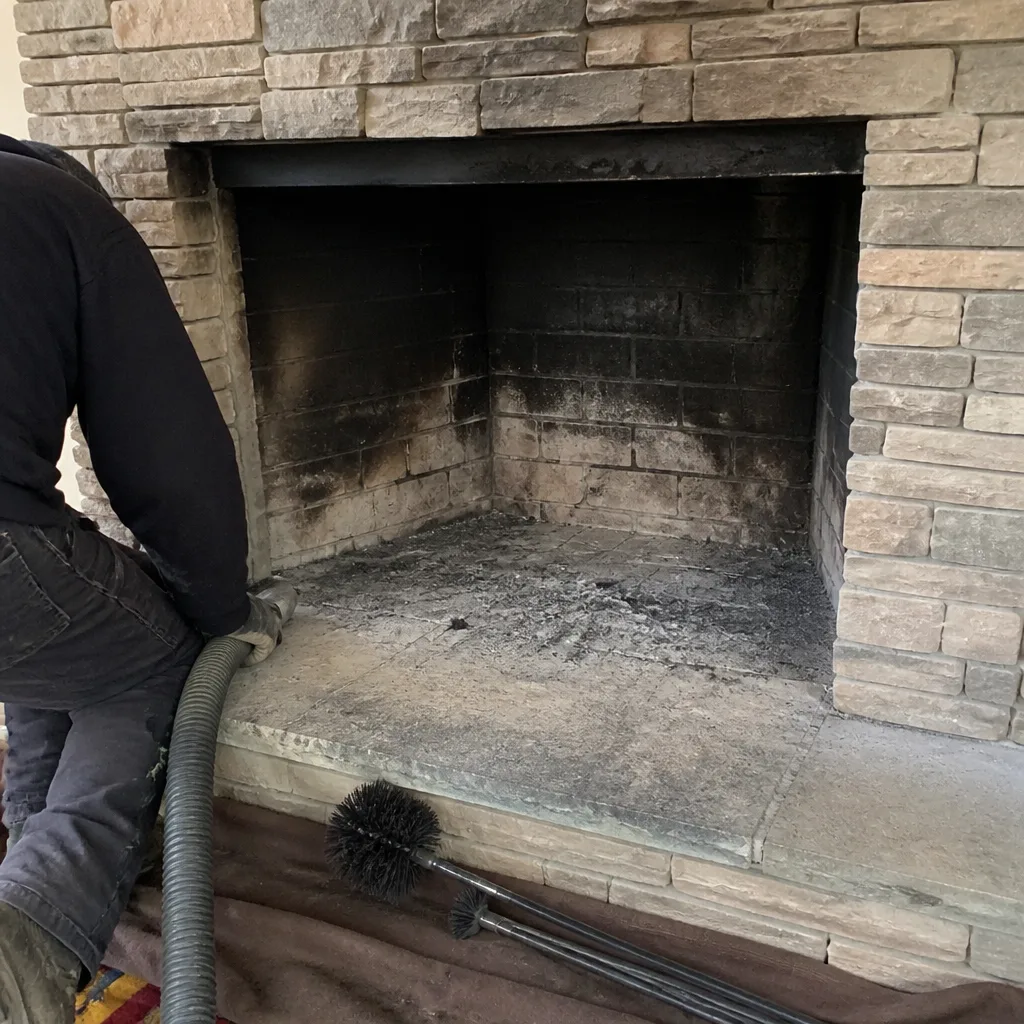
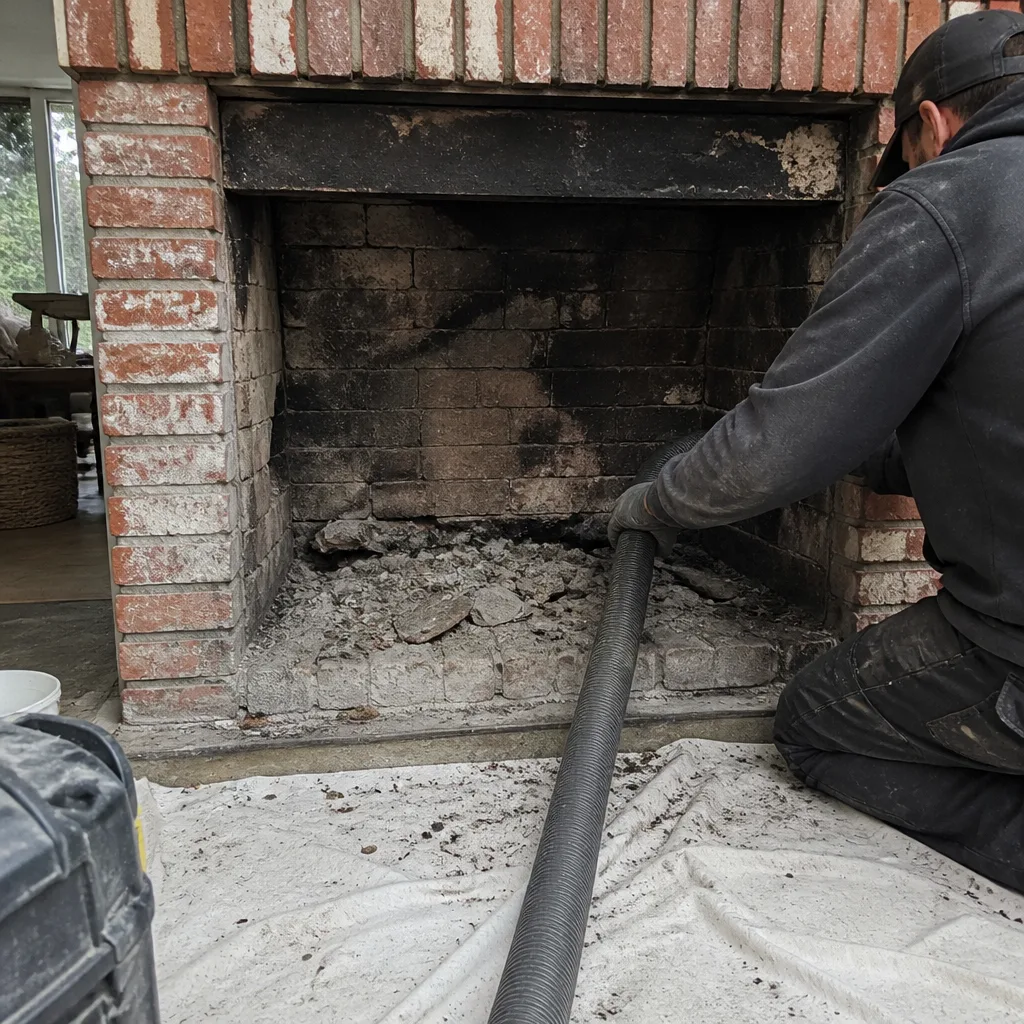 Before
 After
 Before
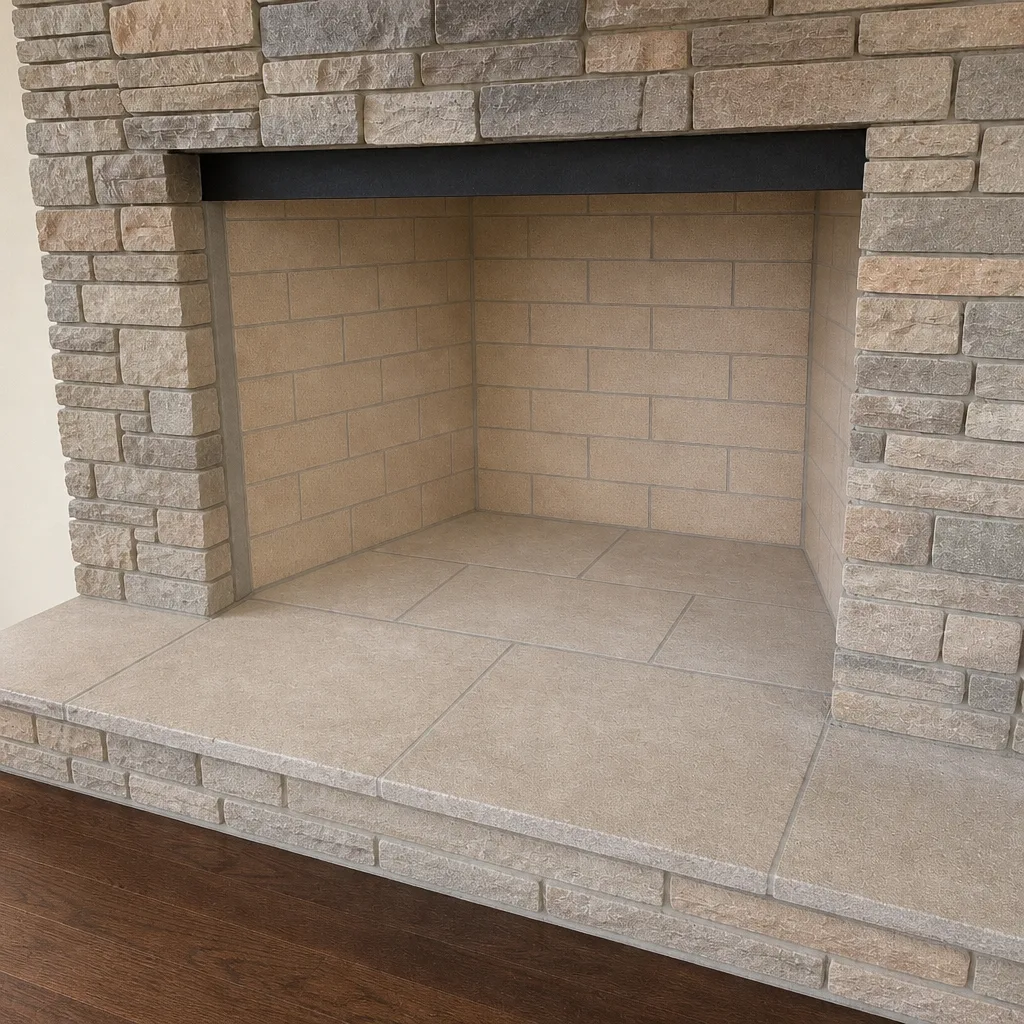 After
When to Call a Professional
Call us when any of the following is true. These are the scenarios where DIY cleaning isn’t the right answer, and a professional sweep and inspection is the safe and efficient path.
- The chimney has never had a camera inspection, or it’s been more than two years.
- You’ve been told by a home inspector that there are liner or crown concerns.
- You burn hard through the season (three or more fires per week) or burn wood of unknown moisture.
- You’ve had a small chimney fire, or you suspect one (a loud roar from the flue, a smell of hot tar, cracked creosote flakes on the roof).
- There’s smoke backdrafting into the room, a persistent smoky smell even when no fire is burning, or a CO detector has ever sounded.
- Your home was built before 1980 and the liner has never been evaluated.
- Any visible damage: spalling brick, cracked crown, rusted cap, missing mortar joints, or a leaning stack.
Chimney Sweep Lynnwood offers free estimates in Lynnwood, and we operate from the firebox to the crown. If you want the inspection to be a standalone diagnostic, we do that too. Call (855) 550-7286. We answer 24/7. Fast dispatch from 7am to 7pm, Sunday through Friday.
Frequently Asked Questions
A typical sweep in Lynnwood sits in a middle range that depends on flue length, access, and whether the smoke chamber needs extra hand tooling. Most homeowners want a range they can plan around rather than a number someone guessed at. The faster path is a written estimate from the sweep who’s actually looked at your cap and flue from the roof, which is why we set our flat price per job after that look. Call (855) 550-7286 for an exact quote. Estimates are free.
You can clean the straight, accessible portion of a flue, and you can reasonably handle the exterior tasks covered above: cap debris checks, ash removal, firebox wiping, and damper operation. What you can’t do is clean a smoke chamber with corbel shelving, evaluate the liner with a camera, or measure draft with a calibrated meter. If your liner condition is confirmed good and the deposits are light, a homeowner brush is a defensible interim measure. If either of those isn’t true, it isn’t.
A camera inspection is diagnostic intelligence, and it’s the only way anyone (sweep included) can say with confidence that a liner is intact. The upsell concern is legitimate, and the answer is that you should see the footage yourself. If your flue looks clean on camera and the draft measures well, the footage will show that. If it shows a cracked joint, you can see exactly what the technician is describing. Anyone who can’t show you the video is either improvising or hiding something.
Two things, slowly. Creosote accumulates on the flue walls; at Stage 3 (glazed, hard, tar-like) it becomes highly flammable, and a chimney fire can burn hot enough to crack tile and pass heat into the framing. Separately, water enters through failing caps and crowns and degrades the masonry and damper assembly, which is a repair path with a much higher cost than an annual sweep. Skipping maintenance doesn’t avoid the cost; it defers it into a bigger number. Call (855) 550-7286 for an exact quote. Estimates are free.
A fireplace used a few times a year for ambiance accumulates deposits slowly, and an annual sweep is usually sufficient rather than a twice-a-year schedule. The exception is an older chimney with an uninspected clay liner, or one burning wood of questionable moisture. In those cases, even a light-use fireplace benefits from an annual camera inspection because the risk is in the liner condition, not the deposit volume.
Four quick checks: (1) has it been more than a year since your last sweep, (2) has it been more than two years since your last camera inspection, (3) are you seeing soot streaks on the firebox walls or cap, and (4) has the fire ever smoked back into the room? Any yes is a reason to schedule. For Lynnwood homeowners specifically, if you’re burning wood that wasn’t covered and dry through the summer, add “moisture” to that list. Call (855) 550-7286. We answer 24/7. Fast dispatch from 7am to 7pm, Sunday through Friday.
The Bottom Line
DIY chimney cleaning isn’t a cost conversation. It’s an access conversation. A homeowner with a brush kit can do real good work above and outside the firebox, and nobody in this trade should tell them otherwise. What they can’t do is reach the smoke chamber shelf, run a pan-and-tilt camera down the liner, or measure draft with a CO-calibrated meter, and those are the three areas where a system fails in ways that cost thousands to repair. If your liner condition is confirmed and recent, a homeowner brush is a fine interim move. If it isn’t, book the sweep and inspection together, and ask to see the footage. Call (855) 550-7286 for a free estimate in Lynnwood. We answer 24/7. Fast dispatch from 7am to 7pm, Sunday through Friday.
Written by the team at Chimney Sweep Lynnwood.