
Last updated November 25, 2026
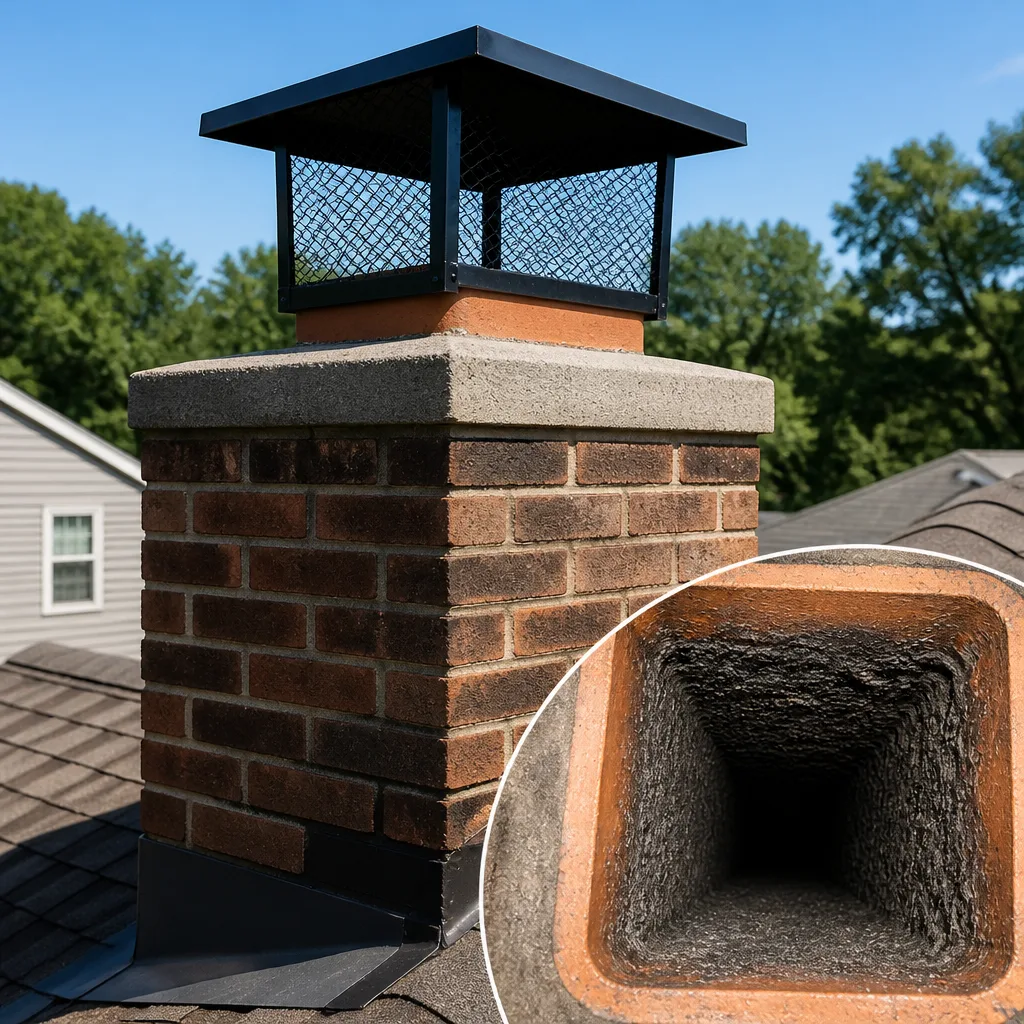 Sweep & inspection
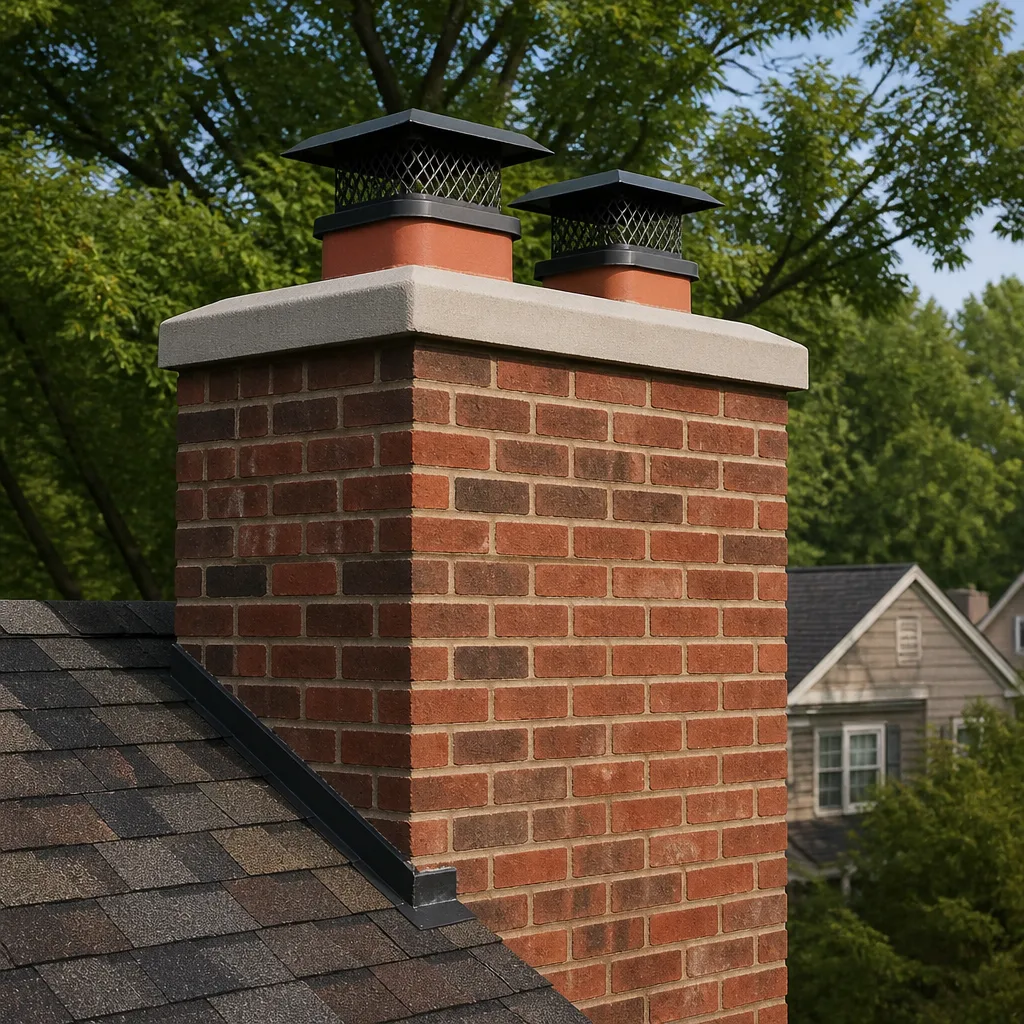 Caps & crowns
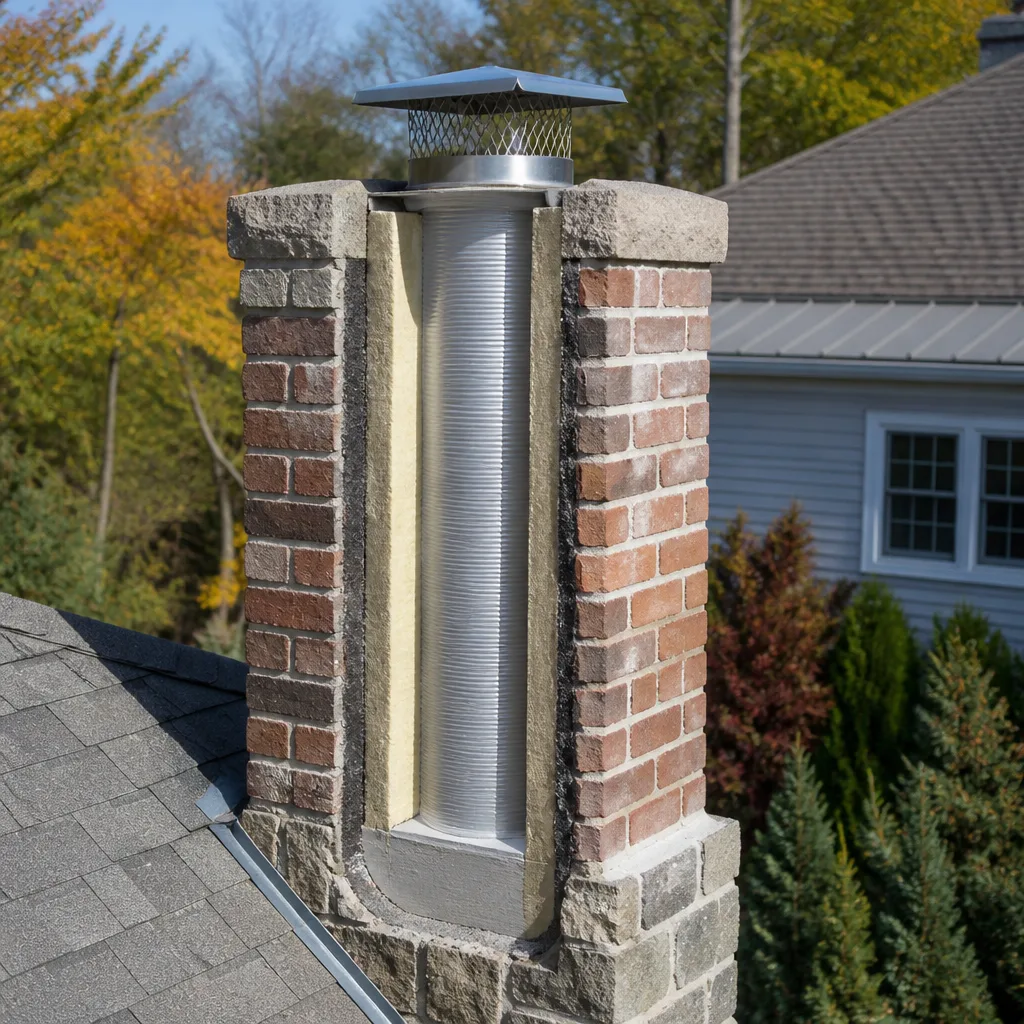 Flue relining
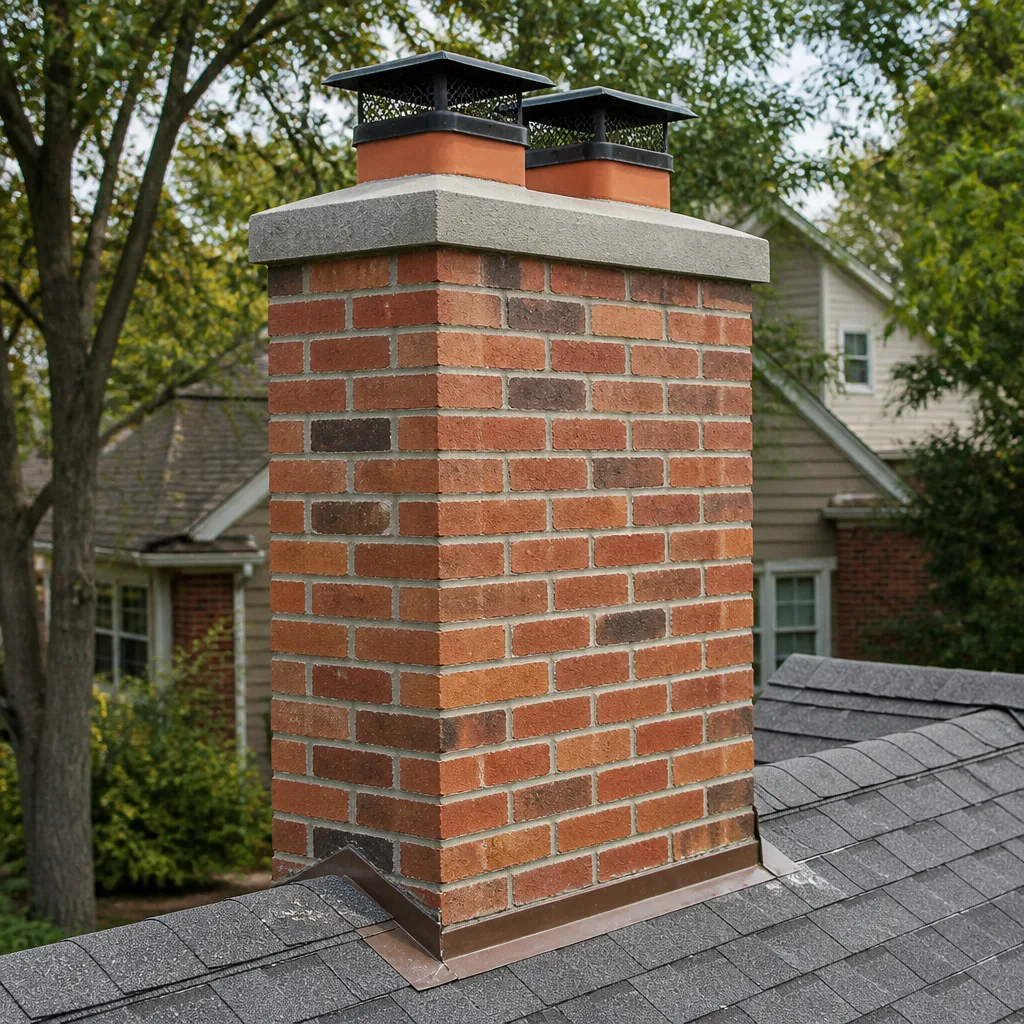 Masonry repair
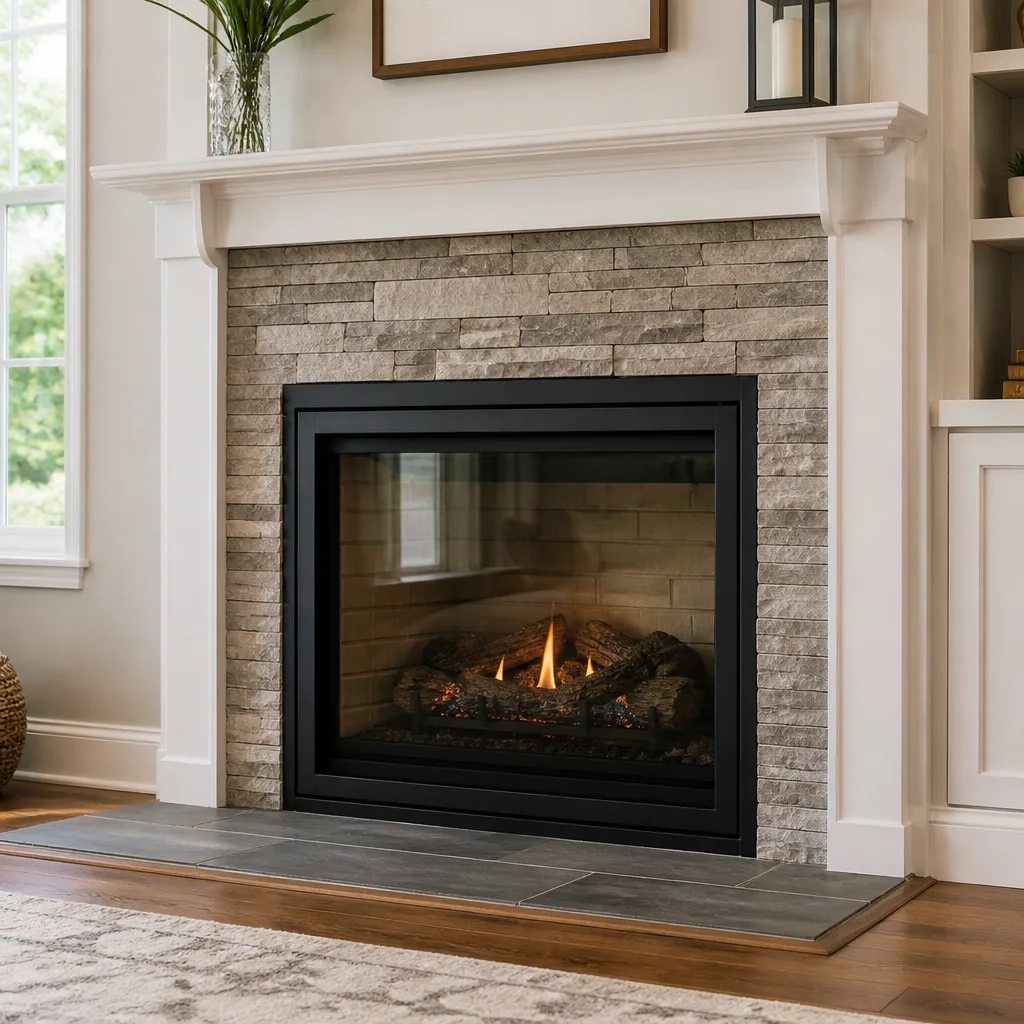 Gas fireplace service
Level 1 sweep and inspection to the NFPA 211 annual standard - flue, crown, cap, and flashing checked and photographed
Chimney sweep logs do not sweep chimneys. They loosen some creosote - which then falls where a brush and vacuum still have to collect it.
Chimney Cleaning Warning Signs: A Lynnwood Homeowner’s Reference Guide
A brown water stain on the ceiling near the fireplace breast in a Lynnwood home is more likely a failed chimney crown or missing cricket flashing than a roof leak. Yet it gets patched, repainted, and ignored, while the structural deterioration underneath continues for another season. That’s the pattern we see most: homeowners watch for dramatic signals like heavy smoke or a strong odor, while the truly actionable warnings show up months earlier and much more quietly. This guide teaches you to read those early indicators accurately, from creosote stages to water-entry symptoms to draft problems, so you know what your Lynnwood chimney is telling you before a repair gets expensive.
Quick Answer
The core warning signs that a Lynnwood chimney needs cleaning or inspection are: creosote buildup beyond 1/8 inch (especially glazed, tar-like Stage 3 creosote), water stains or efflorescence on the masonry, a sulfurous or sharp asphalt smell when the fireplace is cold, spalling brick at the chimney base, a tilted or rusted cap, and back-puffing smoke or a fire that’s hard to start. Any one of these signals is worth a professional evaluation, and two or more together mean you shouldn’t delay. In Lynnwood’s wet climate, water-related symptoms are the ones most often misattributed to roof problems.
Styles & brands we work with
- Sweep & inspection
- Caps & crowns
- Flue relining
- Masonry repair
- Gas fireplace service
Table of Contents
- Creosote Stages: What the Appearance Tells You
- Water-Entry Warning Signs in Lynnwood’s Climate
- Odor Diagnostics: Three Smells, Three Different Problems
- Structural Warning Signs You Can See From the Ground
- Damper and Draft Warning Signs
- How Often Does a Lynnwood Chimney Need Cleaning?
- What Actually Happens If You Skip It?
- What a Professional Inspection Reveals
Creosote Stages: What the Appearance Tells You
Creosote is the residue left behind when wood smoke cools inside the flue, and it accumulates in three distinct stages. The stage matters enormously, because it determines what kind of cleaning is required. A sweep who brushes a Stage 1 flue and calls it done is fine. A sweep who brushes a Stage 3 flue and calls it done has left a fire hazard in place, because glazed creosote doesn’t come off with a brush alone.
Stage 1: Dusty and Easy to Remove
Stage 1 creosote looks like a light soot or dust coating inside the flue. It brushes off readily with standard sweep tools. This is the stage you want to catch your chimney in after a season of burning, and it’s the reason annual cleaning works so well. When we sweep a Lynnwood flue that’s been maintained, we’re usually removing Stage 1 buildup and confirming there’s nothing underneath it.
Stage 2: Flaky and Tar-Like
Stage 2 creosote appears as flaky, crusty, or tar-like deposits that cling more stubbornly to the flue walls. It can often still be removed with aggressive brushing, but it takes longer and requires more thorough mechanical work. Stage 2 is a sign that the fire has been burning cooler than it should, or that the wood has been too wet. Lynnwood’s damp winters make properly seasoned firewood a real challenge, and that shows up in the flue.
Stage 3: Glazed, Shiny, and Chemical-Treatment Territory
Stage 3 creosote is the dangerous stage. It looks glazed, shiny, and hard, almost like a coating of hard candy or varnish on the flue walls. Standard brushes skate over it. Removing Stage 3 creosote requires a chemical treatment to soften the glaze before mechanical removal, and only after that can the flue be brushed clean safely. This is the stage most closely associated with chimney fires, because glazed creosote ignites at much lower temperatures than the earlier stages. If you suspect Stage 3, a cleaning becomes a safety priority, not a maintenance task.
Our technicians have up to 12 years of experience identifying creosote stages on sight, and the difference between Stage 2 and Stage 3 is exactly the kind of diagnostic call that determines whether a standard chimney sweep will do the job or whether chemical treatment is needed first.
Water-Entry Warning Signs in Lynnwood’s Climate
Lynnwood gets a lot of rain, and chimneys here take a sustained soaking for months at a time. Water is the most common cause of masonry chimney deterioration in this climate, and it usually enters at the top, through a cracked crown or a missing or damaged cap. The symptoms, though, often show up lower down and get blamed on something else entirely. Here’s how to read them.
Spalling Brick at the Chimney Base
Spalling is when the face of a brick flakes off, exposing the softer interior. It happens when water gets inside the brick and freezes, then expands. In Lynnwood, you’ll often see spalling at the base of the chimney, near the roofline, and along the top courses. Spalling at the base is especially telling: it means water has been migrating down through the masonry, which points to a failed crown or cap above. A roofer won’t fix this. It’s a chimney problem.
Rust Streaks on the Fireback
If you see rust-colored streaks or staining on the firebox fireback or the metal damper assembly, that’s moisture reaching metal components. Water that gets into the flue and interacts with the firebox metal produces rust, and rust on the fireback is one of the clearest signs of chronic water intrusion. It’s easy to miss because most homeowners look at the firebox for cracks, not rust streaks.
Efflorescence on Exterior Brick
Efflorescence is the white, powdery, salty-looking deposit that appears on exterior brick. It’s caused by water moving through the masonry and leaving mineral salts behind as it evaporates. A little efflorescence isn’t an emergency, but persistent efflorescence on a chimney wall means water is actively traveling through the brick. Combined with spalling, it’s a strong indicator that the crown needs repair or replacement and that a proper chimney repair evaluation is overdue.
Interior Stains Near the Fireplace Breast
Brown or yellowish water stains on the ceiling or wall near the chimney breast are frequently misread as roof leaks. Before water reaches the masonry and spreads, a failing crown, a missing cricket (the small angled diverter that sheds water around the chimney on the roof), or damaged step flashing can let water track down inside the chase. If the stain is centered on the chimney, have the chimney inspected, not just the roof. A chimney inspection tells you exactly what’s happening in the flue and at the crown, which a roof inspection won’t.
Odor Diagnostics: Three Smells, Three Different Problems
Smell is a diagnostic tool most homeowners never use, and it’s a reliable one. Different smells point to different system failures, and once you know the pattern, your nose becomes a useful early-warning instrument during the warmer months when the fireplace is idle.
Musty or Damp Earthy Smell: Moisture Intrusion
A musty smell in the firebox or living room near the fireplace usually means moisture has entered the chimney system. That could be water coming down the flue, damp creosote absorbing humidity, or a leaking crown. Lynnwood’s rainy season keeps chimneys damp, and a musty smell during summer is a common clue that water intrusion has been ongoing. It’s the smell most often dismissed as “the house being closed up.”
Sharp Asphalt or Chemical Smell: Stage 3 Creosote Heating Up
A sharp, asphalt-like or chemical smell when the fireplace is in use (or just after) can indicate glazed creosote in the flue heating and off-gassing. Stage 3 creosote is the danger stage, and this smell means high heat is reaching it. If you notice this, stop using the fireplace and have the flue inspected before your next fire.
Sulfurous or Rotten-Egg Smell: Gas Appliance Issue
A sulfurous or rotten-egg odor is a natural gas warning, not a wood-burning one. If you have a gas log set or a gas fireplace in the same system, this smell can indicate a gas appliance or connection problem. This isn’t a cleaning issue; it’s a safety issue. Treat it like a gas leak: leave the area and call your gas utility immediately. We include it here because homeowners with gas fireplaces sometimes call us first, and knowing which smell signals a chimney problem versus a gas problem matters.
Structural Warning Signs You Can See From the Ground
You don’t need a ladder to catch structural problems. Some of the most important warning signs are visible from the yard, and they’re worth checking every few months, particularly after windy weather. Here’s what to look for, in order.
- Open mortar joints at the crown or near the top. The crown is the concrete cap on top of the masonry chimney, and it’s designed to shed water away from the flue. Cracks or separated joints in the crown mean water has a path in. From the ground, look for visible gaps or a crown that looks cracked or crumbly at its edge.
- A tilted, displaced, or missing cap. The chimney cap is the metal component over the flue opening. A cap that’s tilted, loose, or missing lets rain straight down the flue and allows animals in. A professionally installed cap, like a Gelco or Olympia Chimney model, is the first line of defense against water entry.
- A chimney that leans or separates from the house. A chimney that’s pulling away from the main structure or visibly leaning is a serious structural sign. It usually indicates foundation or footing movement or deteriorated ties to the house. Stop using the fireplace and get an inspection.
- Efflorescence or white staining on exterior brick. Covered above, but worth repeating in a ground-level walkaround: persistent white staining on the chimney’s brick means water is moving through the masonry.
- Chunks of masonry or cap material on the roof or ground. Debris near the chimney base or on the roof means something up top has failed. Don’t assume it’s just old mortar; have it looked at.
Chimney Cap & Crown is a named service for exactly this reason. Water damage in masonry chimneys usually starts at the top, before water reaches the masonry, and stopping it with a properly installed cap and a sound crown prevents the structural problems that later require significant chimney repair. For caps, we work with Gelco and Famco; for crowns, the right materials and a correct slope matter more than the brand.
Our technicians have up to 12 years of experience evaluating crowns and caps on Lynnwood roofs, and the “we can check that” approach is usually cheaper than the “we’ll fix whatever’s wrong” approach. We build the recommendation around the evidence we can show you.
Damper and Draft Warning Signs
Draft problems are the subtlest category of chimney warning sign, and in Lynnwood’s newer, tighter-built homes, they’re increasingly common. A chimney relies on warm air rising up the flue to pull smoke out of the room. In a house that’s well-sealed, the chimney can struggle to pull air from outside, and the result is not a dirty flue but a pressure problem. Here’s how to tell the difference.
- Back-puffing. Smoke that puffs back into the room, especially when you first light a fire or when the door is opened, suggests either an obstruction in the flue or negative pressure in the house. If back-puffing happens only on windy days, suspect pressure. If it happens consistently, suspect obstruction.
- Slow fire starts. A fire that’s hard to get going without a lot of paper and kindling can indicate a flue obstruction or a draft problem. Cold flues take longer to establish upward draft, but a fire that consistently struggles is worth investigating.
- A fire you can’t control. If a fire burns too hot or fast and you can’t control the flame height with the damper, the damper itself may be stuck or damaged. A damper that won’t close properly lets heat escape up the flue and can make the fire hard to slow down.
- A cold downdraft when the fireplace is off. A persistent cold draft coming down the chimney can mean the damper isn’t sealing. That draft is also a heat loss and a route for cold air into the house.
Obstructions can be creosote, but they can also be a bird nest, a collapsed flue tile, or debris. That’s one reason a standard chimney sweep in Lynnwood involves a camera inspection: the camera shows exactly what’s blocking the flue and whether the obstruction is removable creosote or a structural failure. A camera inspection and photo report are included so you can see the obstruction yourself before anyone recommends a fix.
How Often Does a Lynnwood Chimney Need Cleaning?
The general rule is that a chimney should be cleaned when there’s 1/8 inch or more of creosote on the flue walls, and inspected at least annually regardless of cleaning. For most Lynnwood homeowners who burn regularly through the colder months, that means an annual visit. How often you actually need a full cleaning depends on how much you burn, what you burn, and whether the flue is a wood-burning flue or a gas or pellet system.
Here’s a quick reference for how frequently to plan a cleaning:
- Regular wood burning (several fires a week in season): expect an annual cleaning and inspection.
- Occasional wood burning (a fire every week or two): an annual inspection, with a cleaning when the inspection shows enough creosote.
- Gas fireplace (decorative logs): cleaning needs are lower, but annual inspection and cleaning of the firebox and flue still matter for dust and debris.
- Wood stove or insert: annual cleaning and inspection, with more frequent attention if the burn is cool or the wood is damp.
Lynnwood’s wet weather adds a variable. Wood that’s stored outside and not properly covered tends to be damp, which produces more creosote and more of the Stage 2 type. If you’re not sure how seasoned your firewood is, that’s an argument for annual inspections rather than waiting two years. The inspection tells you whether you’re in the low or high creosote category, and the recommendation comes from what the flue actually shows, not from a schedule.
What Actually Happens If You Skip It?
Skipping chimney maintenance has two real risks: chimney fire and carbon monoxide, and then a slower, quieter third risk: structural water damage. A chimney fire happens when flammable creosote in the flue ignites. A flue with heavy buildup can ignite from a hot fire in the firebox, and the fire can burn undetected up the flue while the house seems normal. Carbon monoxide is a separate risk: a flue that’s blocked by creosote or debris, or one that’s cracked and leaking, can allow combustion gases to enter the living space instead of exiting up the chimney.
We take a measured view of risk here. A staged, moderate amount of creosote in a flue isn’t an emergency call at 2am. A glazed Stage 3 flue is a real reason to stop using the fireplace until it’s cleaned. A cracked flue liner or a broken crown is a water-intrusion problem that can wait a week but shouldn’t wait a season. And a sulfur smell or a blocked flue with a gas appliance is a call now. We’d rather tell you which category you’re in, plainly, than let you worry about the wrong one. If work can safely wait, we’ll say so.
What a Professional Inspection Reveals
A chimney inspection is diagnostic intelligence, not a sales funnel. The point is to find out the condition of the entire system from the firebox to the crown, and to show you what’s actually there with a camera and a photo report. A standalone inspection at Chimney Sweep Lynnwood doesn’t require you to book a bundled service, so if the flue is clean and the crown is sound, the honest answer is that nothing needs doing. That’s a good outcome, not a wasted visit.
A thorough inspection covers:
- The firebox and fireback. Cracks, rust streaks, and staining tell us about water intrusion and heat damage.
- The damper. We check that it opens, closes, and seals properly.
- The flue, by camera. We look at creosote type and thickness, cracked or missing flue tiles, and any obstruction.
- The crown and cap, from the top. Cracked crowns, missing or tilted caps, and open mortar joints.
- The exterior masonry. Spalling, efflorescence, and separation from the house.
From that, we can make a specific recommendation. If the flue tile joints are deteriorated but the liner isn’t collapsed, we might recommend HeatShield, a ceramic resurfacing system that restores the flue surface without a full liner replacement in the right conditions. If the flue is unlined or badly deteriorated, a DuraFlex flexible liner system is the more durable answer. Knowing which one your flue actually needs is the diagnostic skill that matters, and it’s why we use trade-grade materials rather than generic substitutes. When a cap needs replacing, we fit a model from Gelco, Famco, Olympia Chimney, or Copperfield, sized to the flue opening, not a universal cap from a hardware store.
You can book a fireplace repair or a full inspection and expect to leave the appointment knowing what you’re dealing with and what it will cost, based on a written estimate. The estimate is free, the flat price is agreed before booking, and nothing is recommended without camera evidence you can see for yourself.
Common Mistakes to Avoid
- Conflating a chimney leak with a roof leak. A ceiling stain near the fireplace breast in Lynnwood is more often a failed crown or missing cricket flashing than a roof defect, and patching it without inspecting the chimney lets the damage continue. Have the chimney checked first.
- Cleaning the flue without identifying the creosote stage. Brushing a flue with Stage 3 creosote and declaring it clean is dangerous; glazed creosote needs chemical treatment before brushing. Confirm the stage before any sweep is called complete.
- Ignoring efflorescence and spalling as cosmetic. White staining and flaking brick are signs that water is traveling through the masonry, and treating them as cosmetic hides an active problem.
- Putting a universal hardware-store cap on a chimney. A cap needs to fit the flue opening and be sized to shed water correctly; an undersized or incorrectly fitted cap can make water intrusion worse. We install Gelco, Famco, Olympia Chimney, and Copperfield caps because the fit matters.
- Assuming annual cleaning is unnecessary because you “burn clean.” Even a clean-burning fire leaves some creosote, and in Lynnwood’s damp climate, a flue that hasn’t been inspected in two years may have water-intrusion problems the fire never reveals.
- Attributing back-puffing to a dirty flue without checking pressure. In tighter-built Lynnwood homes, back-puffing can be a negative-pressure problem, not an obstruction, and the fix is different. A camera inspection tells you which it is.
- Waiting for smoke or a strong smell before calling. The most actionable warning signs are quiet ones: a slight water stain, a bit of efflorescence, a musty summer smell. Those are the ones that save the most money when caught early.
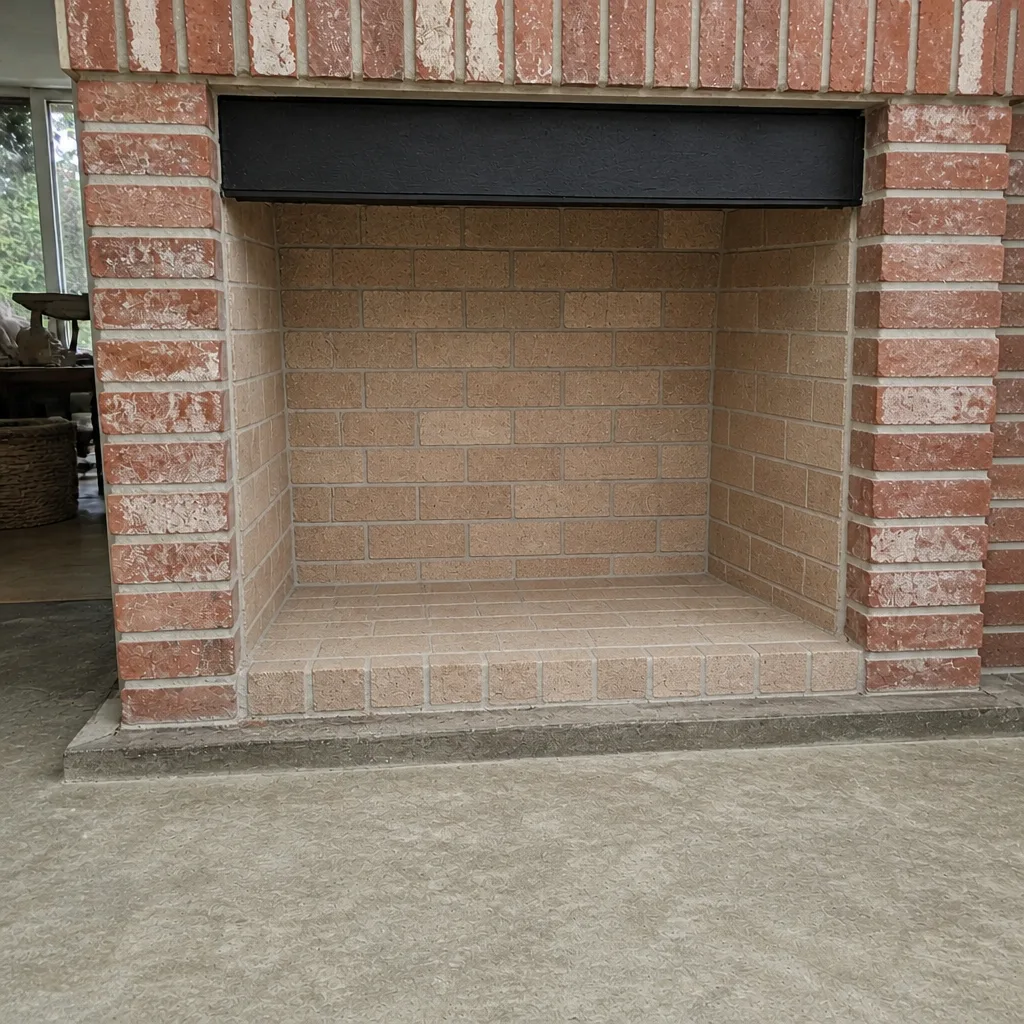
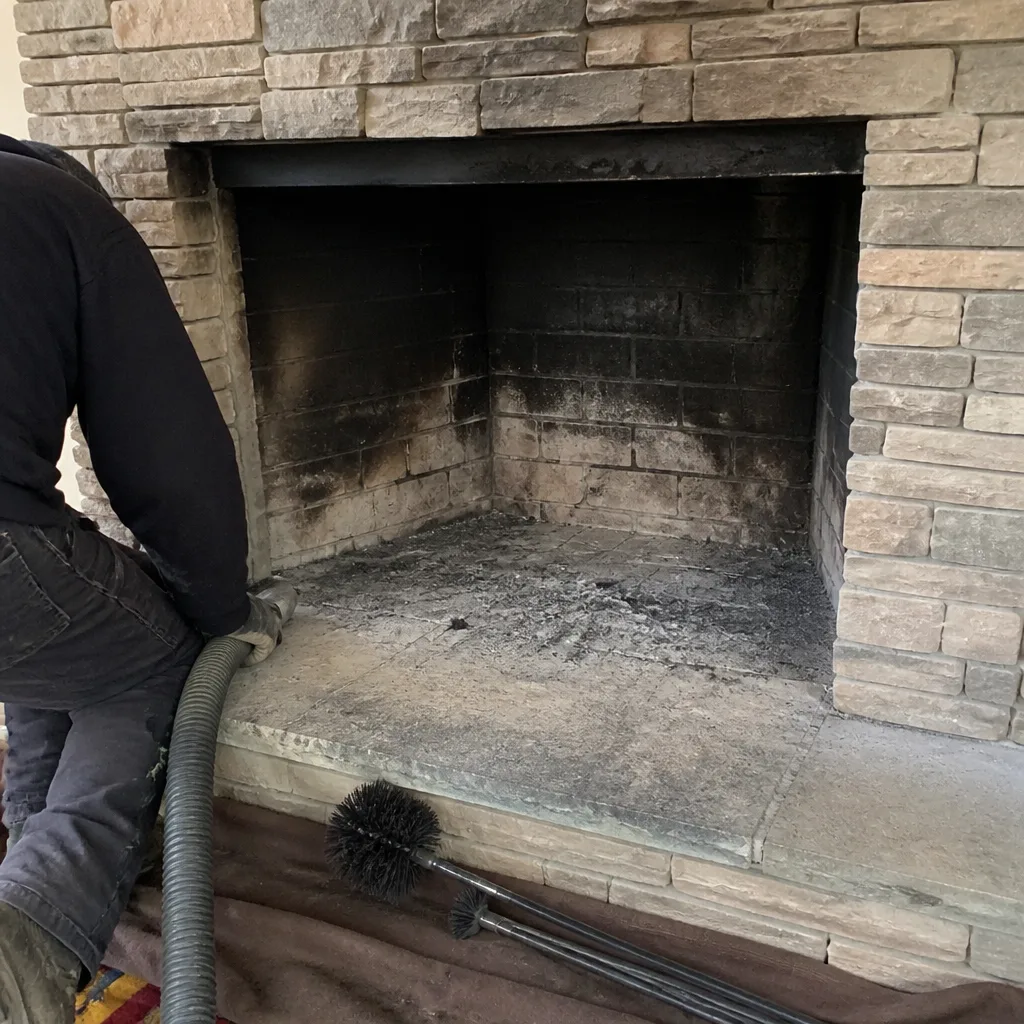
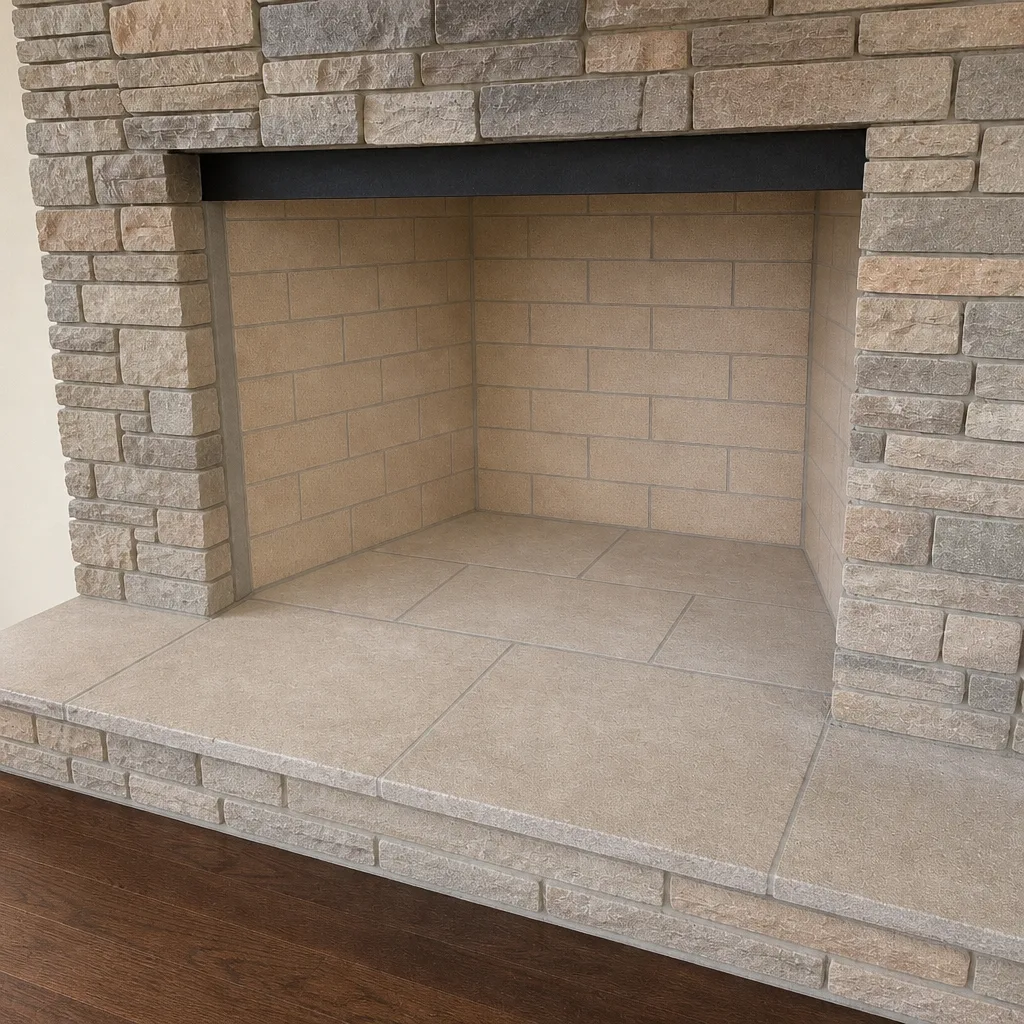
See the difference
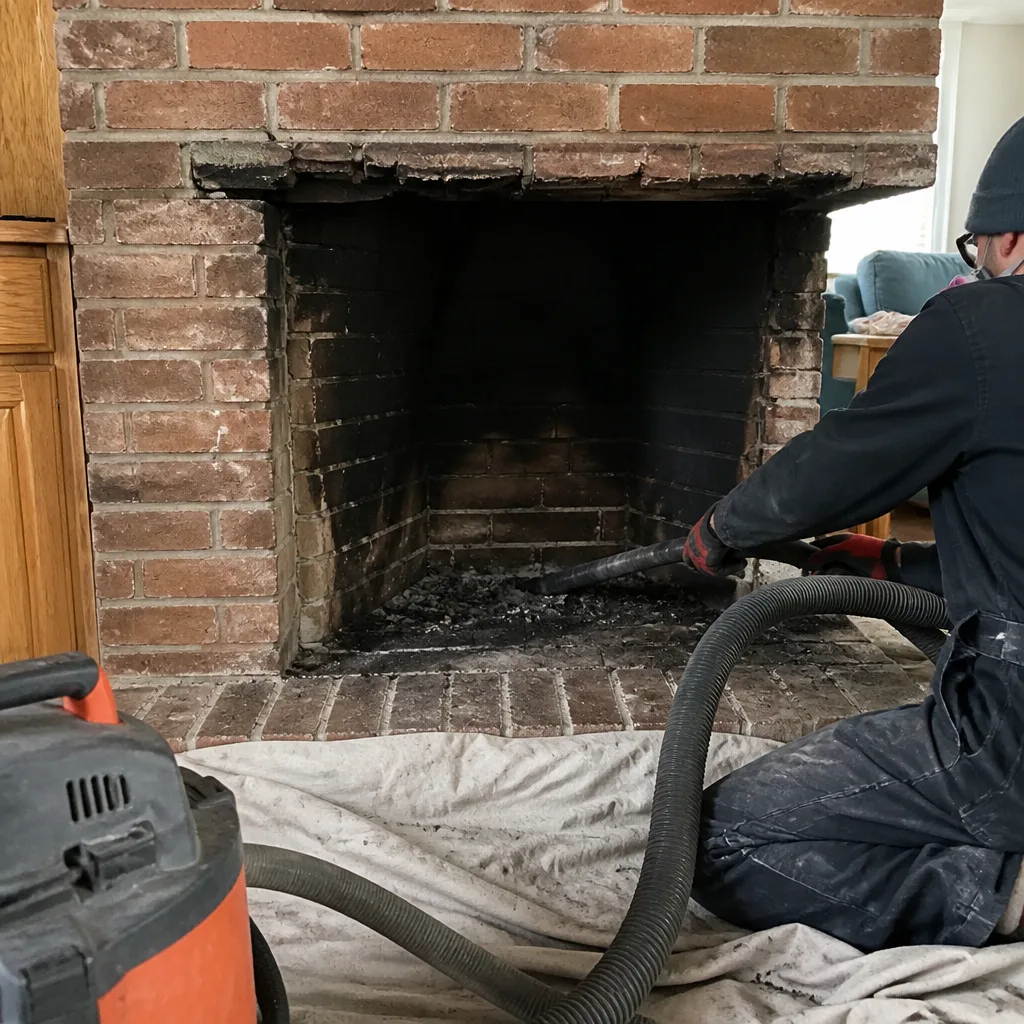 Before
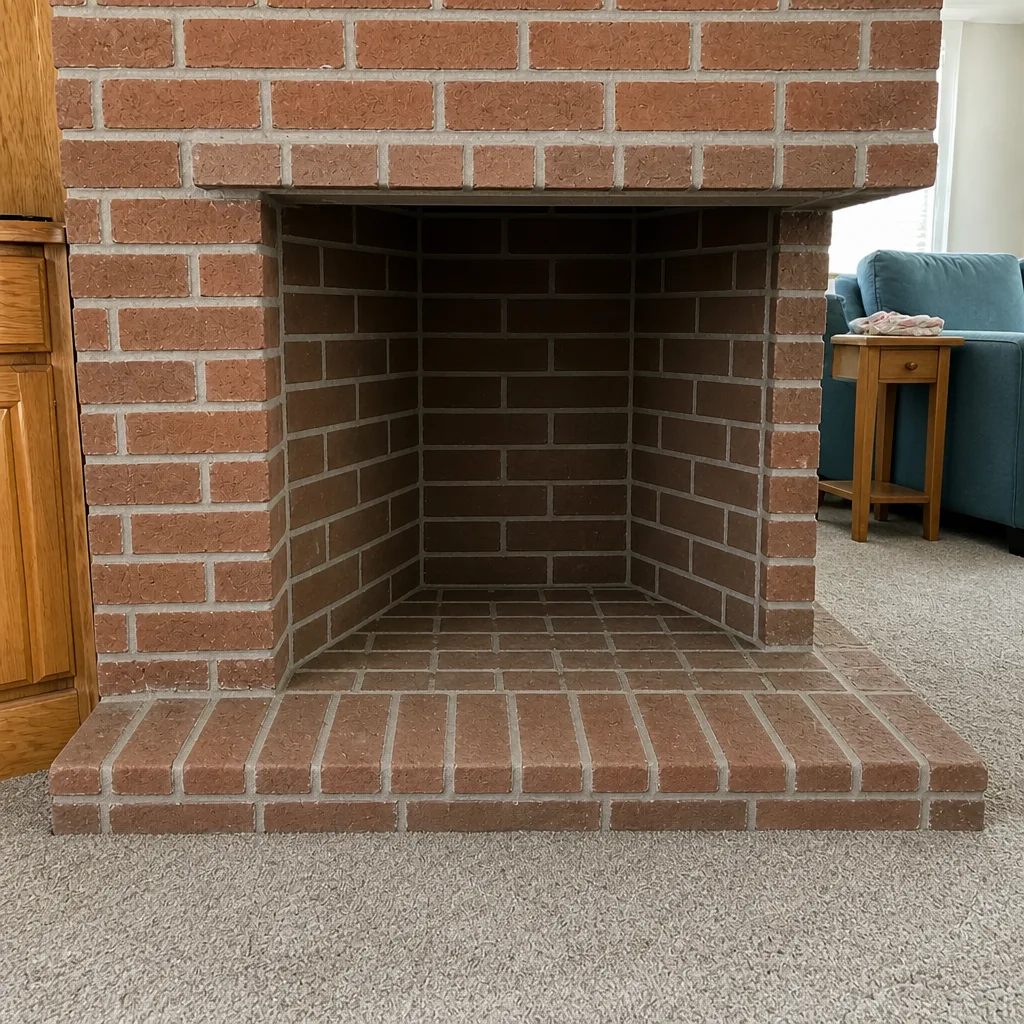 After
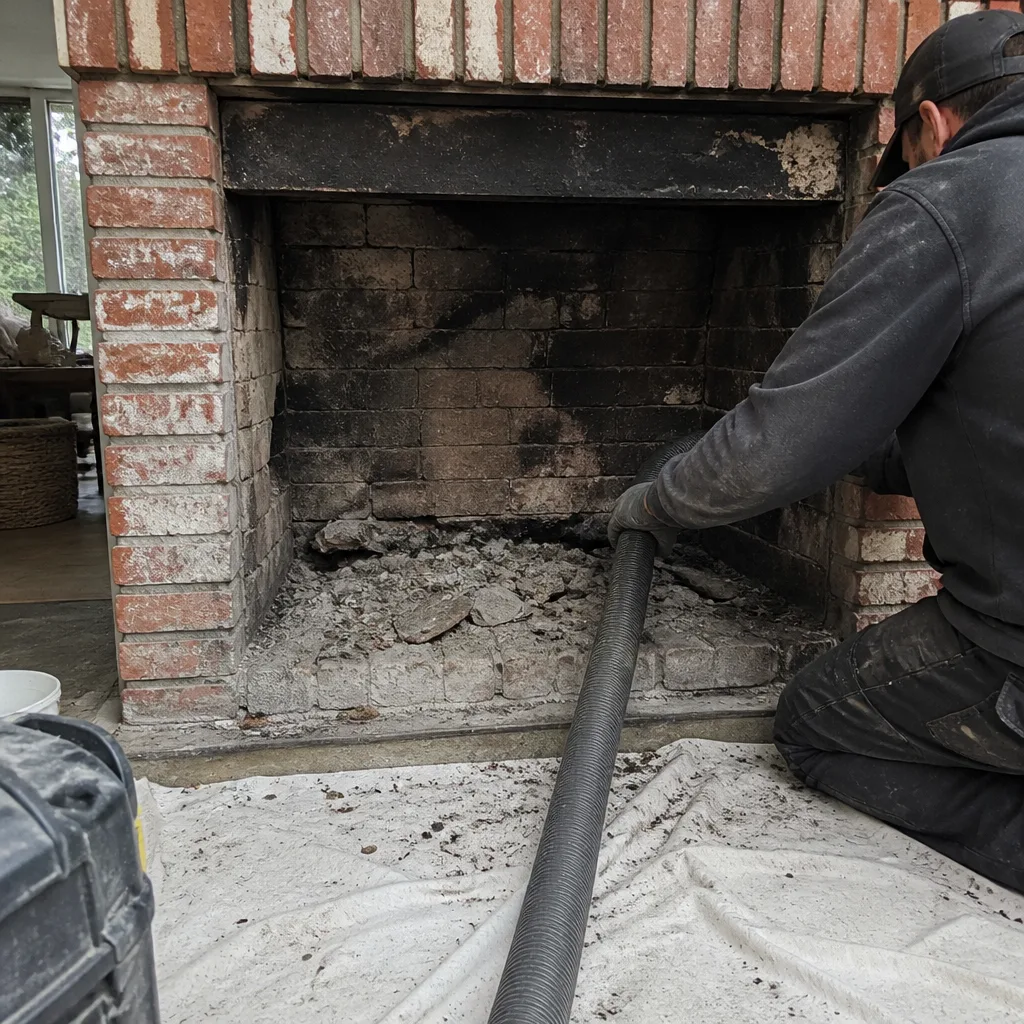 Before
 After
 Before
 After
When to Call a Professional
Call a professional if you see glazed, shiny Stage 3 creosote in the flue, if any interior water staining appears near the chimney, if you notice spalling brick or persistent efflorescence, or if the cap is tilted, loose, or missing. A chimney that’s pulled away from the house, a flue with visible cracks, or a fireplace that back-puffs consistently are all reasons to stop using it and have it inspected. If you have a gas appliance in the system and smell sulfur, leave and call your gas utility first. For everything else, Chimney Sweep Lynnwood offers free estimates in Lynnwood. Call (855) 550-7286. We answer 24/7. Fast dispatch from 7am to 7pm, Sunday through Friday. Our technicians have up to 12 years of experience reading the signs your flue is giving you. Call (855) 550-7286 for a free estimate.
Frequently Asked Questions
A chimney sweep in Lynnwood is priced per job by a written estimate, based on the flue’s condition, the creosote stage, and whether a cap or crown needs attention. There’s no flat list price that applies to every flue, because a Stage 1 sweep and a Stage 3 chemical treatment aren’t the same job. The estimate itself is free, and the price is agreed before the sweep is booked. Call (855) 550-7286 for an exact quote.
Not necessarily. A liner is recommended when the flue tiles are deteriorated, cracked, or missing, or when the flue is unlined. If the tiles are intact but the surface is rough, HeatShield ceramic resurfacing can restore the flue without full relining. If the flue is badly deteriorated, a DuraFlex flexible liner is the more durable fix. The camera inspection is what tells you which case you’re in, and we show you the evidence. Call (855) 550-7286 for an exact quote.
A chimney should be swept when there’s 1/8 inch or more of creosote on the flue walls, and inspected at least annually. For most Lynnwood homeowners who burn through the cooler months, that works out to an annual visit. If you burn less often, annual inspection with cleaning as needed is the sensible approach. Call (855) 550-7286 for an exact quote.
Skipping maintenance allows creosote to build to the point where a chimney fire or a blocked flue becomes possible, and it lets water damage from a failed crown or cap progress through the masonry. The risk isn’t immediate for everyone, but there’s no way to know which stage your flue is at without an inspection. Damage from water intrusion is often the more expensive outcome. Call (855) 550-7286 for an exact quote.
A sweeping removes creosote and soot from the flue; an inspection evaluates the entire system from the firebox to the crown and reports on its condition. An inspection is often done alongside a sweeping, but it can stand alone at Chimney Sweep Lynnwood, with no bundled service required. It’s the diagnostic step, and it comes with a camera inspection and photo report. Call (855) 550-7286 for an exact quote.
A musty smell in a Lynnwood chimney during the warmer months usually means moisture has entered the system, either through a leaking crown, a damaged cap, or damp creosote absorbing humidity. It’s a water-intrusion sign, not just “a closed-up house,” and it’s worth an inspection before the fall burning season. Call (855) 550-7286 for an exact quote.
The Bottom Line
The chimney warning signs that matter most are the quiet, early ones: a little efflorescence on the brick, a musty smell in summer, a cosmetic water stain near the chimney breast, a fire that’s slightly hard to start. In Lynnwood’s wet climate, a lot of those early signs are water-related and get blamed on the roof or the gutters while the crown or cap quietly fails. Read the creosote stage, watch the masonry, listen to the draft, and smell the firebox. With a camera inspection and a photo report, you can see exactly what your flue looks like, and nothing is recommended without evidence you can verify. Call (855) 550-7286 for a free estimate. We answer 24/7. Fast dispatch from 7am to 7pm, Sunday through Friday.
Written by the team at Chimney Sweep Lynnwood.